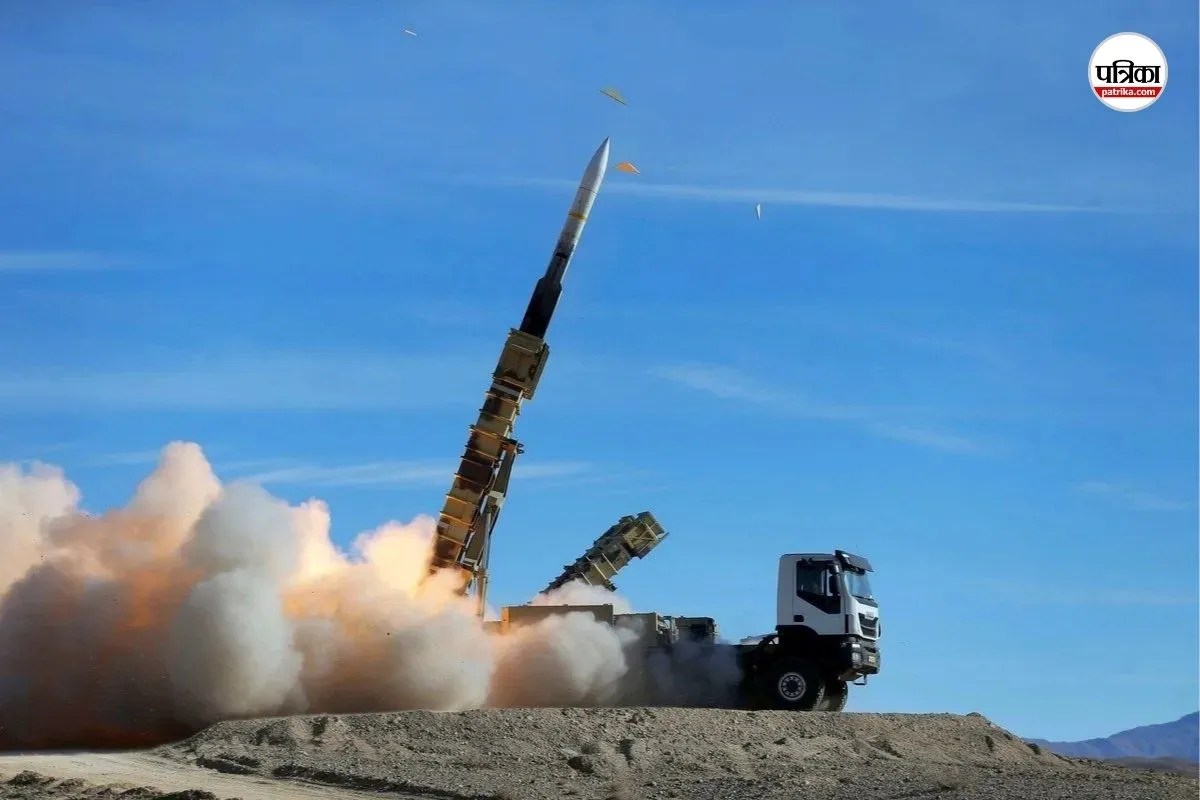
The geographical footprint of Iranian missile and drone technology now extends across nine distinct national territories, representing a fundamental shift in Middle Eastern kinetic competition. This expansion is not merely a series of isolated tactical events but a coordinated strategy of "distributed lethality." By exporting low-cost, high-precision assets to non-state actors and sovereign allies, Tehran has effectively neutralized the traditional air superiority of its rivals. The following analysis deconstructs the technical, logistical, and geopolitical variables that have enabled this reach.
The Architecture of Asymmetric Reach
Iran’s military doctrine operates on the principle of cost-imposition. While a modern interceptor missile may cost $2 million to $4 million, the Iranian-designed Shahed-136 "suicide drone" is estimated to cost between $20,000 and $50,000. This 100:1 cost ratio creates a strategic bottleneck for any defense force attempting to maintain a 100% intercept rate.
The operational reach of these systems is categorized by three technical tiers:
- Short-Range Ballistic Missiles (SRBMs): Systems like the Fateh-110, which provide high-speed, high-accuracy strikes within a 300km radius.
- Extended-Range UAVs: Loitering munitions capable of traveling 2,000km, allowing for launches from deep within Iranian territory or from mobile platforms in allied states.
- Land-Attack Cruise Missiles (LACMs): The Paveh or Soumar series, which utilize low-altitude flight paths to evade traditional radar signatures.
This hardware is currently active or has been deployed within the borders of Israel, Iraq, Syria, Lebanon, Yemen, Saudi Arabia, the United Arab Emirates, Pakistan, and Jordan. Each theater serves a specific function in Iran's regional "Ring of Fire" strategy.
The Logistical Chain of Proliferation
The proliferation of these weapons is not limited to the transfer of finished goods. Iran utilizes a "Kit-to-Combat" model that ensures resilience against interdiction. This model relies on three distinct supply pillars.
Tier 1: Finished System Export
In theaters where Iranian personnel have direct access, such as Syria or specific sectors of Iraq, fully assembled systems are transported via air bridges or overland corridors. This allows for immediate deployment but leaves a significant "signature" for intelligence services to track.
Tier 2: The Knock-Down Kit (KDK)
For proxies like the Houthis in Yemen, Iran exports disassembled components—engines, guidance chips, and carbon-fiber wings—often hidden in commercial shipping. Local assembly plants, guided by Iranian technical advisors, then reconstruct the weapons. This decentralizes the manufacturing risk; destroying a single factory in Iran does not stop the production of missiles in Sana'a.
Tier 3: Indigenous Adaptation
The most sophisticated level involves transferring the blueprints and technical "know-how" for local production. Hezbollah in Lebanon has transitioned toward this model, reducing its reliance on vulnerable supply lines from Damascus. This creates a redundant infrastructure where the loss of one node does not degrade the overall capability of the network.
Theater Analysis: Mapping the Kinetic Impact
The Levant: Israel, Lebanon, and Syria
The proximity of Hezbollah to Israeli population centers transforms Iranian missile technology into a strategic deterrent. The sheer volume of the arsenal—estimated at over 150,000 projectiles—is designed to saturate the Iron Dome and David’s Sling defense systems. In Syria, Iran uses the territory as both a forward operating base and a testing ground for new guidance systems, often under the guise of supporting state forces.
The Gulf Corridor: Saudi Arabia and the UAE
The attacks on Saudi Aramco facilities in 2019 and subsequent strikes on Abu Dhabi in 2022 demonstrated the vulnerability of critical energy infrastructure. These strikes utilized a "mixed swarm" tactic, where drones are used to distract radar while cruise missiles strike the primary target from an unexpected vector. This forces the defender to distribute their sensors in a 360-degree arc, diluting the effectiveness of localized defense batteries.
The Red Sea and Yemen: Global Trade Disruption
The Houthis' use of the "Zulfiqar" and "Quds" missile series has effectively closed the Bab al-Mandab Strait to specific shipping interests. This is the first time a non-state actor has successfully used ballistic missiles to target moving maritime vessels. The technical challenge of hitting a moving ship requires real-time data links and active seekers—capabilities that were previously the exclusive domain of global superpowers.
Technical Bottlenecks and Counter-Measures
Despite the breadth of this reach, the Iranian model faces significant technical constraints.
- Guidance Degradation: Many Iranian systems rely on commercial-grade GPS/GNSS signals. Electronic warfare (EW) suites and signal jamming can significantly reduce the circular error probable (CEP) of these missiles, turning a "precision strike" into a random impact.
- Sensor Saturation: The "brain" of a drone swarm is often its weakest link. If the command-and-control signal is severed, the drones revert to pre-programmed paths, losing their ability to adapt to moving targets or changing weather conditions.
- Production Scarcity: While the airframes are cheap, the high-end semiconductors and specialized engines required for long-range flight are subject to global sanctions. Iran’s ability to scale production is tied to its ability to bypass international export controls on dual-use technology.
The Shift Toward Multi-Vector Warfare
The evolution from single-missile launches to multi-vector, synchronized attacks marks the current stage of Iranian strategy. In the April 2024 strikes against Israel, the world witnessed the largest single drone attack in history. The logic was not necessarily to cause maximum destruction but to gather data on the "interception envelope" of the Western-aligned coalition.
By forcing Israel, the US, the UK, and Jordan to activate their combined air defense, Iran successfully mapped the radar frequencies, battery locations, and response times of its adversaries. This "reconnaissance-by-fire" provides the necessary telemetry to program more effective flight paths for future engagements.
The regional impact is a permanent state of high-readiness. Countries that once viewed themselves as "behind the front lines," such as Jordan or Pakistan, now find their airspace utilized as transit corridors for kinetic hardware. This erodes national sovereignty and forces these states into difficult diplomatic balancing acts between Tehran and its rivals.
The Strategic Pivot
The era of air superiority being defined by manned fighter jets is ending in the Middle East. The proliferation of Iranian missile and drone technology has democratized long-range precision fire. For regional planners, the focus must shift from "interception" to "pre-emption."
Relying on expensive interceptors is a losing economic proposition over a long-term conflict. The only viable counter-strategy is the "Left-of-Launch" approach: targeting the manufacturing hubs, the technical advisors, and the digital command-and-control networks before the systems ever leave the ground. Any defense strategy that begins only once the drone is in the air has already conceded the economic advantage to the aggressor. The next phase of regional security will be defined not by who has the best shield, but by who can most effectively dismantle the factory that builds the sword.