Diplomacy is often just a fancy word for professional stalling. When Pakistan’s Foreign Office leaks that "U.S.-Iran indirect talks are taking place," the media treats it like a breakthrough. It isn't. It is a carefully managed charade designed to maintain a status quo that benefits everyone except the people living in the crossfire. We are told these backchannel whispers are the precursor to stability. In reality, they are the mechanism by which both Washington and Tehran avoid making the hard choices required for actual peace.
The Backchannel Fallacy
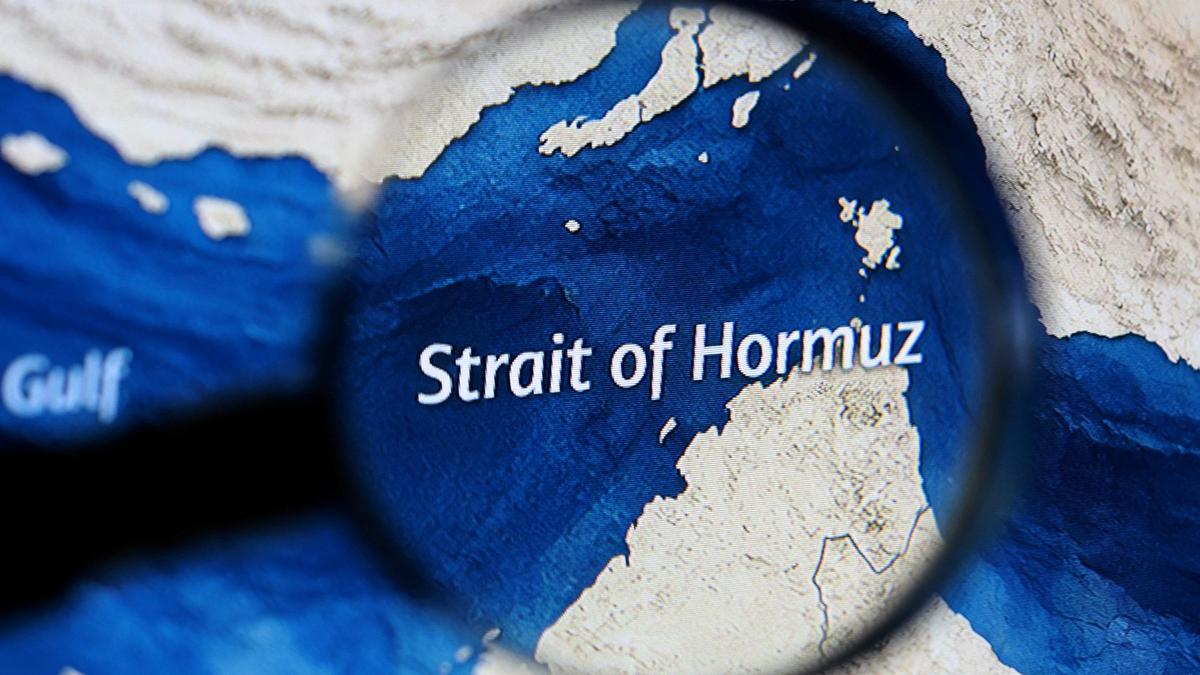
The mainstream narrative suggests that because two adversaries are talking through intermediaries—likely Oman, Qatar, or Switzerland—progress is being made. This is a fundamental misunderstanding of how geopolitical leverage works. Indirect talks are not a bridge; they are a buffer. They allow both sides to claim they are "exhausting diplomatic options" while simultaneously funding proxy conflicts and tightening sanctions.
I have watched these cycles play out for decades. One side offers a minor concession on enrichment levels; the other offers a temporary waiver on a fraction of frozen assets. The press calls it a "de-escalation." I call it a subscription model for conflict. If these nations actually wanted a resolution, they would sit at a table. The "indirect" nature of the talks is a feature, not a bug—it provides plausible deniability so both leaderships can keep their hardliners happy at home.
Pakistan as the Convenient Messenger
Why is Pakistan the one announcing this? It isn't out of a sense of altruistic regional concern. Islamabad is desperate for the Iran-Pakistan (IP) gas pipeline to move forward to solve its crippling energy crisis. However, the threat of U.S. sanctions keeps that project in a state of permanent suspended animation.
By signaling that Washington and Tehran are talking, Pakistan is attempting to manufacture a permissive environment for its own bilateral interests. It’s a transparent play. They want to create the illusion of a thaw so they can justify moving dirt on a pipeline that the U.S. has explicitly warned them against.
The Cost of "Productive" Ambiguity
We need to talk about the math of sanctions. When the U.S. uses "indirect talks" as a carrot, it creates a volatile market environment. Speculation drives energy prices, but it never leads to the long-term capital investment required for regional infrastructure.
Consider the $Energy$ equation. For a country like Pakistan, the cost of not building the pipeline is calculated in lost GDP growth, yet the cost of building it under current sanctions is total financial isolation. The U.S. uses these talks to keep Iran in a "gray zone"—too weak to dominate, but just relevant enough to justify a massive U.S. military footprint in the Middle East.
If you want to understand the physics of this deadlock, look at the $Pressure$ vs. $Volume$ relationship in a closed system:
$$P \propto \frac{1}{V}$$
As the U.S. increases the pressure ($P$) through sanctions, the volume of diplomatic and economic space ($V$) for third parties like Pakistan shrinks. These "talks" are nothing more than a temporary release valve to prevent the entire system from exploding, without ever actually lowering the heat.
The Broken Premise of "People Also Ask"
When people ask, "Will U.S.-Iran talks lower oil prices?" or "Is a new nuclear deal close?" they are asking the wrong questions. The right question is: "Who profits from a deal never being reached?"
- The Defense Sector: A permanent state of "almost war" is the most profitable environment for arms sales to neighboring Gulf states.
- The Iranian Hardliners: Sanctions provide a perfect excuse for domestic economic failure. Without an external "Great Satan" to blame, they have to answer for their own mismanagement.
- The U.S. Political Machine: No president wants to be the one who "gave in" to Tehran, but no one wants a third war in the region either. The "indirect talk" loop is a political godsend.
Stop Waiting for the Grand Bargain
The "Grand Bargain" is a ghost. It doesn't exist. The belief that a single piece of paper will align the interests of a revolutionary theocracy and a global superpower is a fantasy sold to the public to keep them engaged with the news cycle.
True regional stability wouldn't come from a secret memo passed in Muscat. It would come from economic integration that makes conflict too expensive to contemplate. But the current framework of "indirect diplomacy" ensures that integration never happens. It keeps Iran isolated, Pakistan energy-starved, and the U.S. locked into a security paradigm that belongs in the 1990s.
We have reached a point where the process of talking has replaced the goal of reaching an agreement. The medium is the message, and the message is: "We aren't going to fix this, but we'll keep meeting in five-star hotels to discuss why we can't."
The Brutal Reality for Investors
If you are looking at this news as a signal to bet on regional stability, don't. High-level whispers are not a strategy. They are a stall tactic. The IP pipeline will remain a pipe dream, Iran will continue its "maximum resistance," and the U.S. will continue its "maximum pressure."
The only thing that has changed is the person leaking the information. Pakistan is shouting because it’s running out of air. The rest of the world is just watching the clock.
Burn the playbook that says diplomacy is always a sign of progress. Sometimes, it’s just the sound of two sides sharpening their knives under the table.