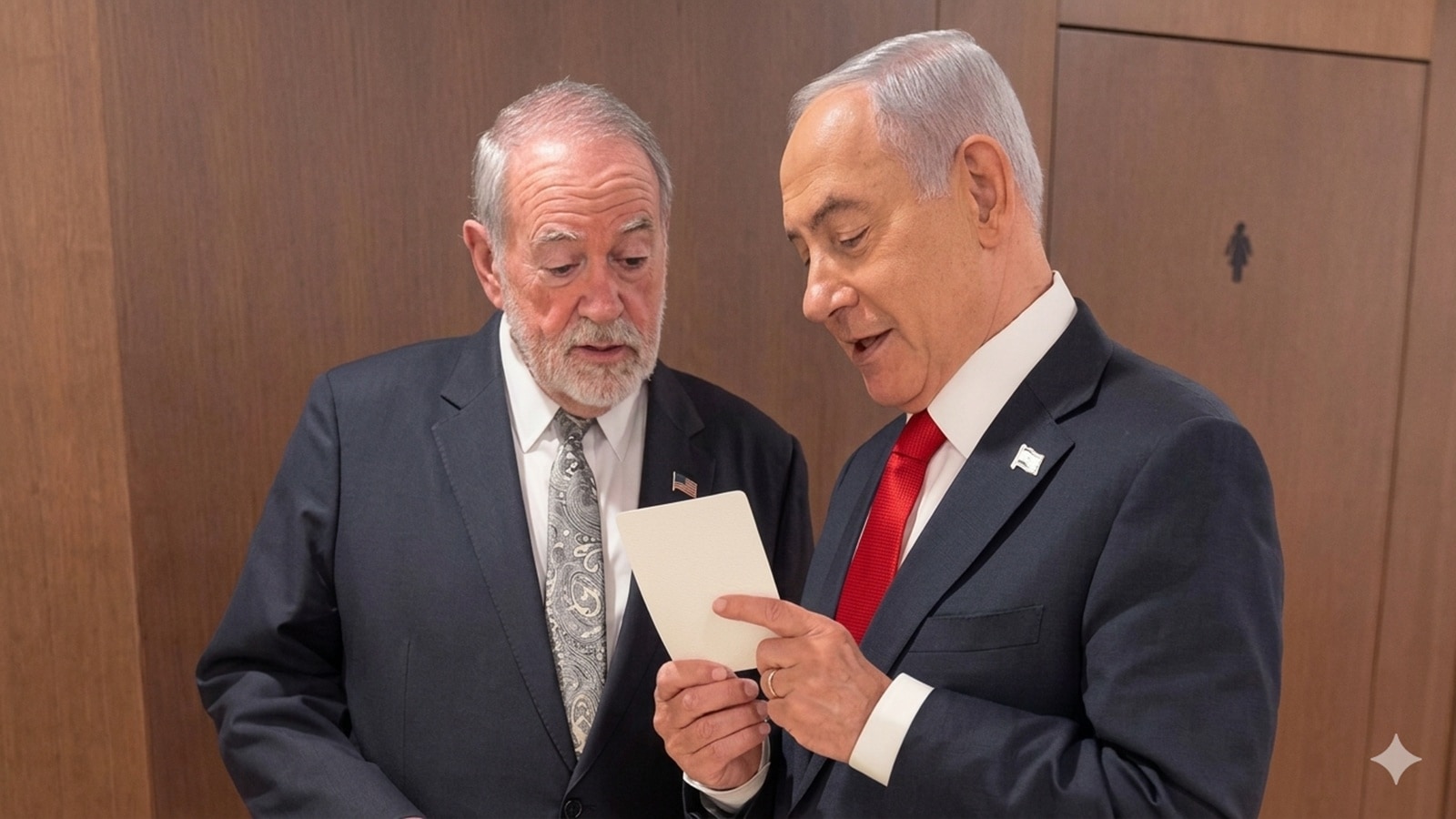
Benjamin Netanyahu is not dead. The Israeli Prime Minister confirmed this fact not through a formal press gallery or a scripted address from the Knesset, but via a handheld camera and a casual stroll with a United States envoy. This wasn't just a rebuttal to a viral rumor; it was a calculated maneuver in a theater of war where digital ghosts are as dangerous as physical munitions.
The rumors of Netanyahu’s demise began as a low-level hum in the darker corners of Telegram and X. Within hours, the speculation had reached a fever pitch, fueled by recycled footage and ambiguous reports of "medical emergencies" at high-level government facilities. By the time the Prime Minister appeared on screen alongside a high-ranking American diplomat, the goal had shifted. This was no longer about health. It was about demonstrating that the command structure of the Israeli state remained intact during a period of unprecedented regional volatility.
The swiftness of the response highlights a new reality for modern heads of state. Silence is no longer perceived as dignity; it is interpreted as a vacuum. In the current geopolitical climate, a leader’s physical presence is their most valuable political currency.
The Anatomy of a Digital Death Hoax
The mechanics of the "death rumor" have evolved far beyond the tabloid headlines of the past. Today, these campaigns are often state-sponsored or driven by coordinated influence networks designed to trigger market instability and internal civil unrest. When a rumor suggests a leader has fallen, it isn't just seeking clicks. It is seeking a "freeze" in decision-making and a panic in the streets.
In the case of Netanyahu, the timing was surgically precise. The rumors peaked during a lull in official communications, a brief window where the Israeli public was already on edge due to ongoing security threats. By injecting a narrative of leadership collapse into that tension, the architects of the rumor hoped to see a fracture in national morale.
The choice of using a US envoy as a "human timestamp" was the most critical element of the video. In the age of sophisticated video manipulation, a leader standing alone in front of a white wall proves nothing. A skeptic could argue the footage was pre-recorded or generated by a high-end neural network. However, the presence of a foreign dignitary—someone whose schedule is tracked by international media and whose own government would have to verify the meeting—adds a layer of authentication that a solo video lacks. It anchors the Prime Minister in a verifiable moment of time.
Why Traditional Media Failed to Kill the Story
One of the most striking aspects of this incident was the failure of traditional news outlets to act as the primary debunkers. For years, the public looked to established mastheads to confirm or deny such massive claims. Now, the speed of social media distribution has rendered the 24-hour news cycle obsolete. By the time a major network could vet the rumor with their sources in Jerusalem, the narrative had already looped the globe three times.
Netanyahu’s team bypassed the traditional press entirely. They understood that a formal statement issued to a news agency would be met with skepticism or buried in a "he-said, she-said" reporting style. Instead, they opted for the raw, unedited feel of a "proof of life" video. The lower production value actually increased its perceived authenticity. It felt immediate. It felt real.
This shift represents a fundamental change in how governments manage crises. They are moving away from being the "subjects" of news and toward being their own primary broadcasters. While this allows for faster debunking of falsehoods, it also removes the layer of journalistic scrutiny that traditionally held leaders accountable.
The Geopolitical Cost of Uncertainty
In the Middle East, perception is power. A leader who is perceived as weak, ill, or incapacitated invites aggression from rivals and unease among allies. The Netanyahu death rumors weren't just a nuisance for his PR team; they were a direct threat to the deterrence posture of the Israel Defense Forces.
If Hezbollah or Iran believed the Israeli cabinet was in a state of chaotic succession, their calculus for escalation would change instantly. The "Yes, I'm alive" video was, therefore, an act of defense. It communicated to the region that the finger remained on the pulse of the nation and, by extension, on the trigger of its military apparatus.
However, the necessity of such a video reveals a profound vulnerability. If a leader must constantly go live to prove they still exist, the threshold for creating a national crisis has been lowered to the cost of a few bot accounts and a convincing script. We are entering an era where the absence of a social media post for 48 hours could trigger a dip in the stock market or a mobilization of troops.
Beyond the Screen
We must look at the technical arms race happening behind these videos. As generative tools become more accessible, the ability to create a "deepfake" that can fool the average viewer is nearly here. Governments are now forced to invest in digital forensic teams whose sole job is to verify the biometric markers of their own leaders' broadcasts.
The Netanyahu video used several "analog" tricks to thwart accusations of being a fake:
- Variable Lighting: Moving from an indoor setting to an outdoor one, where shadows and reflections are harder to simulate perfectly.
- Interactions: Physical contact or close-proximity dialogue with a third party whose presence is independently confirmed.
- Ambient Noise: Unfiltered background sounds that match the supposed environment.
Despite these measures, the "skepticism loop" is hard to break. For those who want to believe a leader is dead or dying, any video can be dismissed as a sophisticated forgery. This creates a permanent state of epistemological crisis where the truth is not determined by evidence, but by which narrative the audience chooses to subscribe to.
The Strategy of Direct Engagement
Netanyahu has long been a proponent of bypassing traditional media filters, a trait he shares with several other prominent global populists. By speaking directly to the "camera in his pocket," he builds a sense of intimacy and transparency with his base, even if the content itself is highly choreographed.
This direct-to-consumer model of governance is effective during a crisis but dangerous for long-term stability. It centralizes the survival of the state within the personhood of the leader. When the individual becomes the sole source of truth, the institution of the government itself begins to fade into the background.
The immediate debunking worked. The rumors subsided, the markets steadied, and the focus shifted back to the tangible conflicts on Israel's borders. But the precedent is set. The next time a rumor starts, the "proof" will have to be even more elaborate, even more immediate, and even more personal.
The underlying issue isn't the health of one man, but the health of our global information ecosystem. When the baseline of reality is so easily distorted, the simple act of existing becomes a political statement. The video wasn't just a message to the Israeli people or the US envoy; it was a defiant stance against a digital tide that seeks to erase facts in favor of friction.
If you are waiting for a return to the days of calm, verified, and slow-moving news, you are waiting for a world that no longer exists. Every leader is now a content creator, and every citizen is a forensic analyst, whether they want to be or not. The next time a major figure disappears from public view for more than a few days, watch how quickly the void is filled with ghosts. Then, watch for the inevitable video, filmed on a smartphone, reminding us that the physical world still has a vote.
Go look at the metadata of the next "official" video you see from a world leader. Check the timestamps, look at the shadows, and ask yourself why they felt the need to post it. That is where the real story lives.