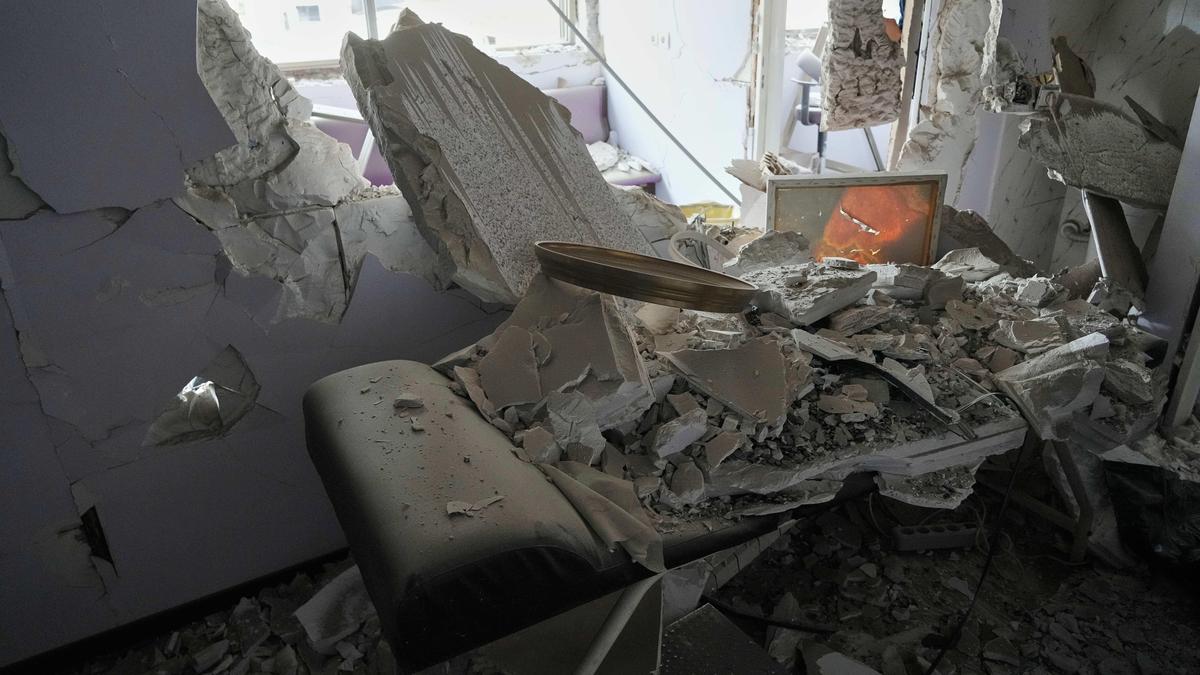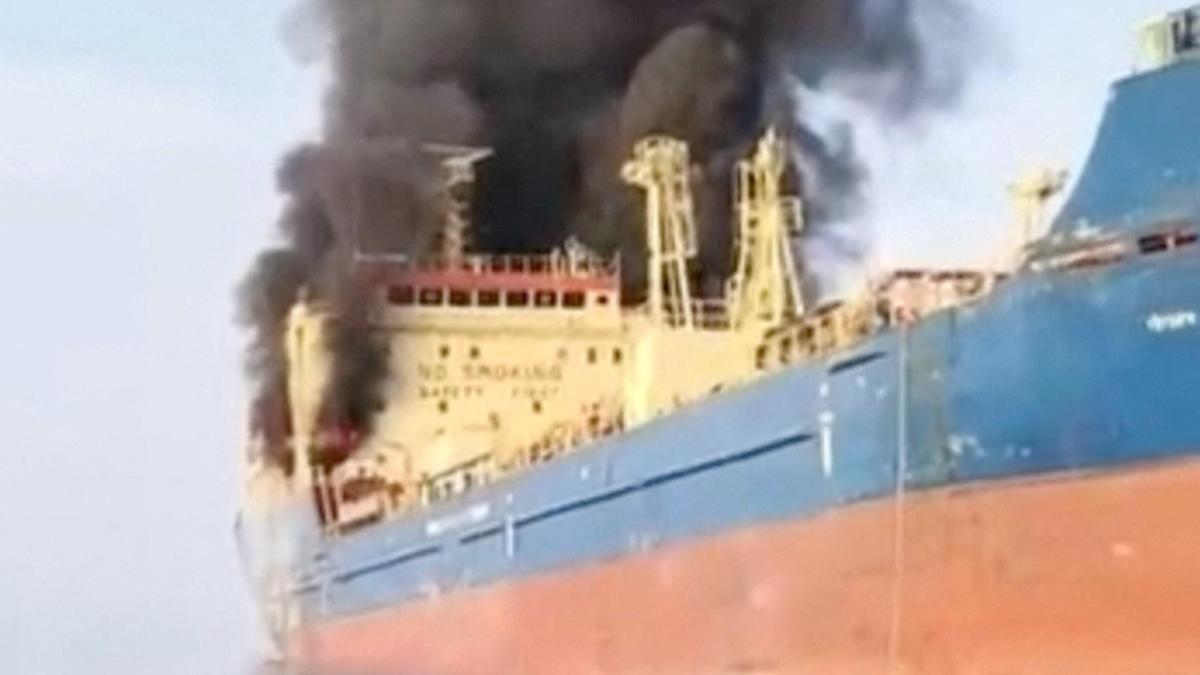
The Persian Gulf isn't just a stretch of water anymore. It's a shooting gallery. When the oil tanker Skylight was targeted recently, it didn't just rattle the shipping industry; it sent a localized shockwave through the thousands of Indian families who have sons, husbands, and fathers sailing those volatile routes. We’ve reached a point where "business as usual" is a death wish for maritime crews. If you’re under the impression that international law or a massive hull protects these workers, you’re dead wrong.
Indian seafarers make up roughly 10% of the global maritime workforce. They're the backbone of the world's energy supply chain. Yet, they're increasingly finding themselves as collateral damage in geopolitical games they didn't sign up for. The attack on the Skylight serves as a brutal reminder that the gap between corporate profit and crew safety is widening. For an alternative look, read: this related article.
The reality of sailing in a combat zone
Let’s be blunt about the Persian Gulf. It’s one of the most congested and politically charged waterways on the planet. Most of the world’s oil passes through the Strait of Hormuz. When a vessel like the Skylight gets hit, it’s rarely an accident. These attacks are calculated. They’re messages sent from one nation to another, written in fire and steel.
The problem is that the messengers—the sailors—are often from Kerala, Tamil Nadu, or Punjab. They aren't combatants. They’re professionals trying to earn a paycheck. When an explosive drone or a missile strikes a tanker, the technical "damage assessment" talks about hull integrity and spill risks. Nobody talks enough about the sheer terror of being trapped in a floating metal box filled with millions of gallons of flammable liquid while someone tries to blow it up. Further coverage regarding this has been provided by USA Today.
Recent data from the International Maritime Bureau (IMB) shows a disturbing trend. While traditional piracy in places like the Gulf of Guinea has seen occasional dips, "asymmetric" threats in the Middle East are spiking. We aren't just dealing with guys in skiffs with AK-47s anymore. We're talking about military-grade hardware being used against civilian targets.
Why Indian sailors are the most vulnerable
You might wonder why this hits India harder than other nations. It’s a numbers game, but also a policy failure. The Directorate General of Shipping (DGS) in India has issued advisories, sure. But advisories don't stop drones.
- Contractual traps: Many Indian seafarers work for third-party manning agencies. These contracts often have murky clauses about "high-risk areas." Sailors feel pressured to stay on board even when a route turns into a war zone because they fear being blacklisted or losing their hard-earned wages.
- The "Flag of Convenience" problem: Many tankers, including those targeted recently, fly flags of countries like Panama or Liberia. These nations offer little to no military protection. When things go south, the sailors can't exactly call the Panamanian Navy for a rescue.
- Lack of specialized training: Most maritime training focuses on fire safety, navigation, and technical repairs. Very few Indian seafarers are trained in modern "gray zone" warfare tactics—how to spot a loitering munition or what to do during a drone swarm attack.
The Skylight incident isn't an isolated event. It’s part of a pattern that includes the MSC Aries seizure and various other "shadow war" incidents. For an Indian sailor, the Persian Gulf has become a gauntlet.
The psychological toll no one discusses
Shipping companies love to talk about "resilience." It's a corporate buzzword they use to avoid paying for better security. But there’s nothing resilient about a 24-year-old third officer from Kochi suffering from PTSD because he spent three weeks wondering if a missile would fly through his cabin window.
I've talked to mariners who’ve returned from these routes. They describe a constant, low-level hum of anxiety. Every radar blip is a potential threat. Every fishing boat is a scout. This mental strain leads to fatigue, and fatigue leads to mistakes. On a tanker carrying 2 million barrels of crude, a mistake is a catastrophe.
The industry needs to stop treating these attacks as "incidental risks." They are fundamental shifts in the nature of the job. If the route is a war zone, the pay, the protection, and the right to refuse work must reflect that.
What needs to change immediately
We can't keep waiting for the next ship to burn before we act. The Indian government and global maritime bodies need to move past "monitoring the situation." That phrase is code for "doing nothing while watching the news."
- Mandatory Hazard Pay: If a ship enters a designated high-risk area in the Persian Gulf or Red Sea, hazard pay shouldn't be a "bonus" left to the company's discretion. It must be a non-negotiable, industry-standard percentage of the base salary.
- Right to Repatriate: Sailors must have a clear, legally protected right to sign off before a ship enters a conflict zone, without any financial penalty or threat to their future employment.
- Armed Security Requirements: We need to normalize the presence of Private Maritime Security Companies (PMSCs) on all high-value targets in these waters. If a ship is worth $100 million and the cargo is worth $150 million, the company can afford a security team.
- Satellite-Linked Emergency Support: The Indian Navy's Information Fusion Centre for the Indian Ocean Region (IFC-IOR) is a great start. But we need better, direct communication lines between civilian merchant vessels and naval assets in the region.
The failure of international maritime law
International law is currently a toothless tiger in the Persian Gulf. The UNCLOS (United Nations Convention on the Law of the Sea) wasn't designed for a world where non-state actors and proxy militias use $20,000 drones to disable $100 million ships.
When the Skylight was hit, did the international community rally? Not really. There were a few "strongly worded statements." That's it. This lack of accountability emboldens attackers. They know that hitting a merchant ship brings a lot of attention but very few actual consequences.
The shipping industry's reliance on "neutrality" is failing. You can't be neutral when someone is shooting at you. India, as a major provider of manpower, has the leverage to demand better. If Indian sailors collectively refused to man ships entering these zones without specific security guarantees, the global economy would grind to a halt in days. That’s the kind of leverage we aren't using.
Hard truths for the maritime industry
Let’s stop pretending the Skylight was just a "unfortunate incident." It was a warning. The era of safe, boring commercial shipping in the Middle East is over for now.
If you're a seafarer or have a family member at sea, you need to be proactive. Check the "High Risk Area" (HRA) definitions provided by the Joint War Committee (JWC) in London. These are the folks who decide insurance premiums, and they usually have a more honest view of the danger than the manning agencies do.
Don't let an agency tell you a route is safe just because they need a body on the bridge. Look at the maps. Read the maritime intelligence reports. If the ship is headed for the Persian Gulf, ask about the specific security measures on board. Ask if there are "citadels" (fortified safe rooms) and if they're actually stocked with food and water.
The Skylight attack proved that the "it won't happen to us" mindset is a lie. It can happen. It is happening. And until the industry puts people over petroleum, the Indian seafarer remains the most endangered professional on the high seas.
Demand transparency from your employers. Demand that the DGS takes a harder line with foreign ship owners. Shipping is a noble profession, but it shouldn't be a suicide mission. The risks in the Persian Gulf are real, they are growing, and they are currently being borne almost entirely by the crew members who have the least power to change the situation.
Update your emergency contact info. Review your life insurance policies. Check the "War Risk" clauses in your employment contract. It's grim, but in 2026, it's the only way to stay ahead of the curve.