The plastic bag of groceries sits on the counter like a ticking bomb.
Farrah doesn’t look inside yet. She knows exactly what is there, and more importantly, she knows what isn't. There are no pistachios. There is no red meat. There is a single carton of eggs that cost more today than a full dinner did three years ago. She wipes her forehead, leaving a faint streak of dust from the Tehran metro, and listens to the silence of her apartment. It is a heavy, pressurized silence. It is the sound of a middle class evaporating.
For decades, the story of Iran was told through the lens of geopolitics, nuclear centrifuges, and shouting men in grey suits. But the real story—the one that actually matters to the eighty-five million people living it—is told in the grocery aisles and the frantic refreshes of black-market currency apps.
Hope used to be a commodity here. Now, it’s a luxury no one can afford.
The Math of Despair
To understand why a city of fifteen million people is vibrating with a quiet, jagged panic, you have to look at the numbers through Farrah’s eyes. She is a teacher. She is educated. She represents the backbone of a society that is currently being snapped over the knee of a free-falling rial.
A few years ago, $1 was worth about 30,000 rials. As of this spring, that same dollar fetches over 600,000 rials on the open market.
Mathematics is usually cold. In Tehran, it is visceral. It means that every time Farrah blinks, her life’s savings shrink. If she keeps her money in a local bank, she is essentially watching a block of ice melt in the desert sun. By the time she reaches for it, there will be nothing left but a damp spot on the ground.
This isn't just "inflation" in the way Westerners discuss a two-percent hike in the price of milk. This is an economic decapitation. When a currency loses nearly 95% of its value in a decade, the very concept of a future becomes a hallucination. You cannot save for a house. You cannot plan a wedding. You cannot even reliably predict if you can afford your blood pressure medication by next Tuesday.
The Ghost of the Great Bazaar
Walk through the Grand Bazaar today and the sensory overload is still there. The scent of saffron and cumin hangs thick in the air. The vaulted brick ceilings still echo with the shouts of porters. But look closer at the faces of the shopkeepers.
They are staring at their phones.
They aren't checking the news for sports scores. They are watching the "Bonbast" or other unsanctioned sites that track the real-time collapse of the rial. A carpet seller might quote you a price in the morning, only to refuse the sale by the afternoon because the money you’re holding has become significantly less valuable in the four hours it took you to decide.
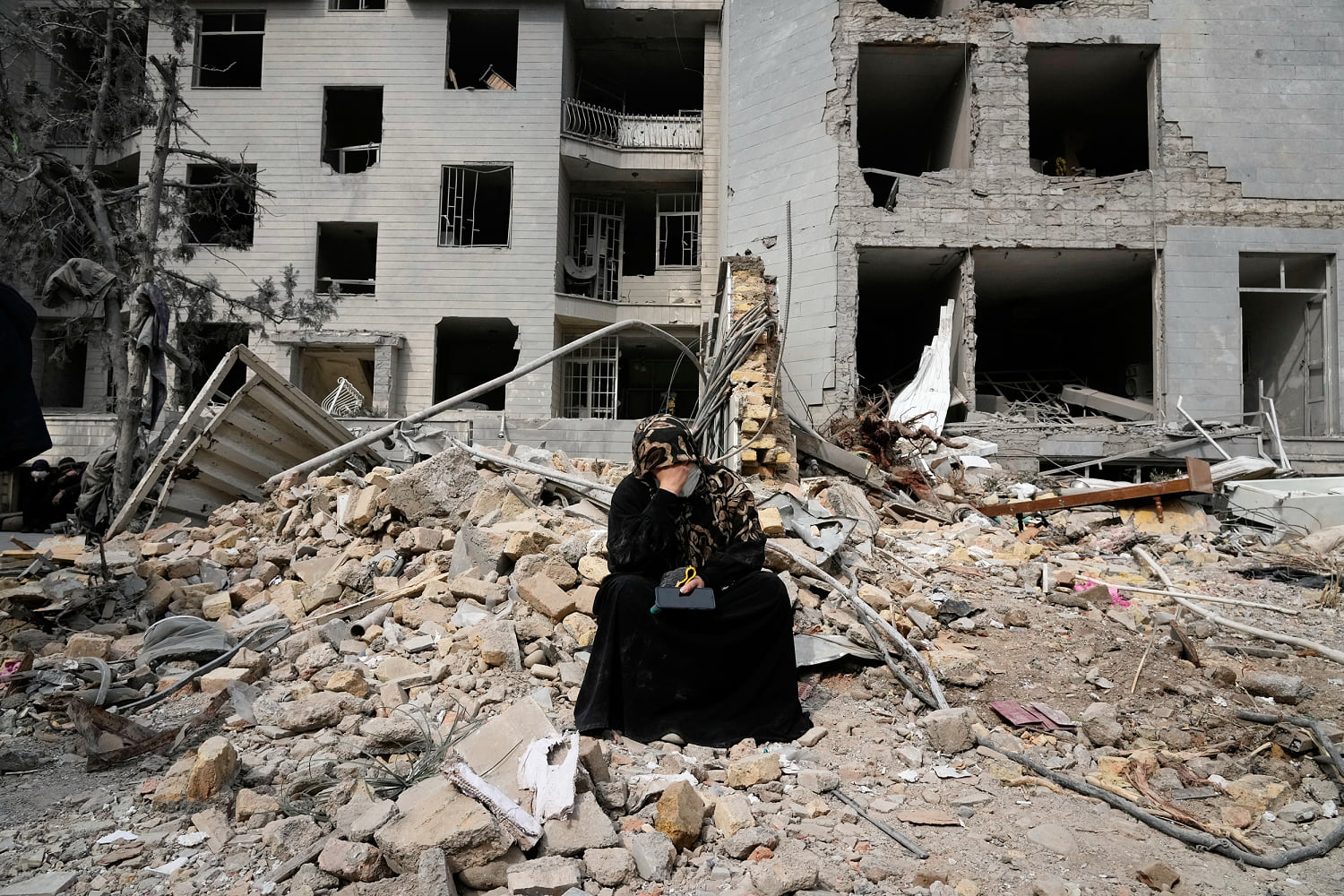
"They are turning the country into ruins," a merchant tells me, his voice lowered so it doesn't carry to the men in mismatched uniforms patrolling the perimeter. He isn't talking about physical bombs. He is talking about the systematic mismanagement that has turned one of the most resource-rich nations on Earth into a place where people sell their kidneys to pay off credit card debt.
The ruins are invisible. They are found in the empty storefronts, the unfinished construction projects that stand like skeletal remains against the Alborz mountains, and the "Brain Drain" that has become a flood. Every person under thirty with a degree is looking for a door. Any door.
The Architecture of a Trap
Imagine you are standing in a room where the ceiling is slowly, almost imperceptibly, lowering.
At first, you don't notice. Then, you have to duck. Eventually, you are on your knees, and the only thing you can think about is the weight above you. This is the psychological state of the Iranian public.
The government points the finger at "external enemies" and "cruel sanctions." And while those sanctions certainly have teeth—cutting Iran off from the global banking system and stifling oil exports—the people in the streets aren't buying the script anymore. They see the corruption. They see the billions spent on regional proxy wars while the domestic infrastructure crumbles. They see the children of the elite—the "Aghazadehs"—posting photos on Instagram from Ferraris in London or penthouses in Vancouver, while the children of Tehran scavenge through trash bins.
It is a dissonance that breeds a specific kind of rage. Not the loud, flammable rage of a street protest—though that erupts periodically—but a cold, simmering resentment that hardens into a permanent state of being.
The Invisible Stakes
When we talk about a country "falling apart," we usually look for smoke. But the most dangerous collapses are the ones that happen inside the home.
Consider the "marriage crisis." In Iranian culture, the ability to start a family is the ultimate marker of adulthood. But the traditional "Mehrieh"—the dowry or gift a groom pledges to his bride—is often calculated in gold coins. As the rial plummeted, the price of these coins skyrocketed. Thousands of young men now find themselves in "debtors' prison" because they cannot pay the gold they promised during a more stable era.
The result? The marriage rate is cratering. The birth rate is following it. A civilization that prides itself on its deep historical roots is watching its branches wither because the soil has become toxic.
This is the "ruin" the people speak of. It is the destruction of the social fabric. When people are forced into a survivalist mindset, the things that make a society beautiful—art, poetry, hospitality, trust—start to peel away like old wallpaper.
A City of Night Owls
Tehran has always been a city that breathes at night. But lately, the nights feel different.
The parks are full of families at 11:00 PM, but they aren't there for a picnic. They are there because it's free. They sit on blankets, drinking tea from thermoses brought from home, because a trip to a cafe would cost a third of a week's salary. They talk in hushed tones about the latest rumors: Will there be a war with Israel? Will the internet be cut off again? Will the price of bread be subsidized for one more month?
There is a grim humor that develops in these conditions. Iranians have a long history of "dark comedy" as a survival mechanism. They joke that the Rial is now so worthless that it's cheaper to use the bills as wallpaper than to buy actual wallpaper. But the laughter is thin. It doesn't reach the eyes.
The real fear isn't just the poverty. It's the uncertainty. Human beings can adapt to hardship, but we struggle to adapt to chaos. When the rules change every day—when you don't know if your passport will be valid tomorrow or if the bank will let you withdraw your own money—the nervous system eventually snaps.
The Mirror of History
The tragedy of the current moment is that it didn't have to be this way. Iran is a country with a highly educated workforce, massive gas reserves, and a strategic location that should make it a global hub.
The "ruins" are a choice.
They are the result of a leadership that has prioritized ideological purity over the basic dignity of its citizens. Every time a new "morality police" van appears on a street corner, it serves as a reminder of where the government's priorities lie. They are willing to spend immense resources to ensure a woman’s hair is covered, yet they cannot seem to find the resources to keep the lights on during the summer or the heaters running in the winter.
The dichotomy is staggering. You have a population that is largely secular, tech-savvy, and desperate to join the modern world, governed by a small circle of men who are terrified of that very world.
The Egg on the Counter
Back in the kitchen, Farrah finally opens the carton of eggs.
She handles them with the delicacy of someone holding diamonds. She remembers her father telling stories of the 1970s, of a time when the Iranian passport was welcomed across Europe and the rial was a respected currency. To her, those stories feel like fairy tales. They belong to a different planet.
She isn't thinking about regime change or international treaties right now. She is thinking about tomorrow’s breakfast. She is thinking about her son, who is studying German in his bedroom, hoping to get a visa so he can leave and never look back.
She wants him to go. That is the ultimate heartbreak of the modern Iranian mother: the greatest act of love is to help your child escape their own home.
The sun sets over Tehran, casting a long, golden light over the smog-choked skyline. From a distance, it looks magnificent. It looks like a city that could last forever. But inside the apartments, the people are counting their change and watching the walls close in, waiting for a breaking point that feels both inevitable and terrifying.
Farrah cracks an egg into a pan. The sizzle is the only sound in the room.
Tomorrow, the price will be higher. Tomorrow, the hole in the center of her life will be a little bit wider. And tomorrow, like millions of others, she will wake up and try to survive the ruins of a dream she didn't choose to destroy.