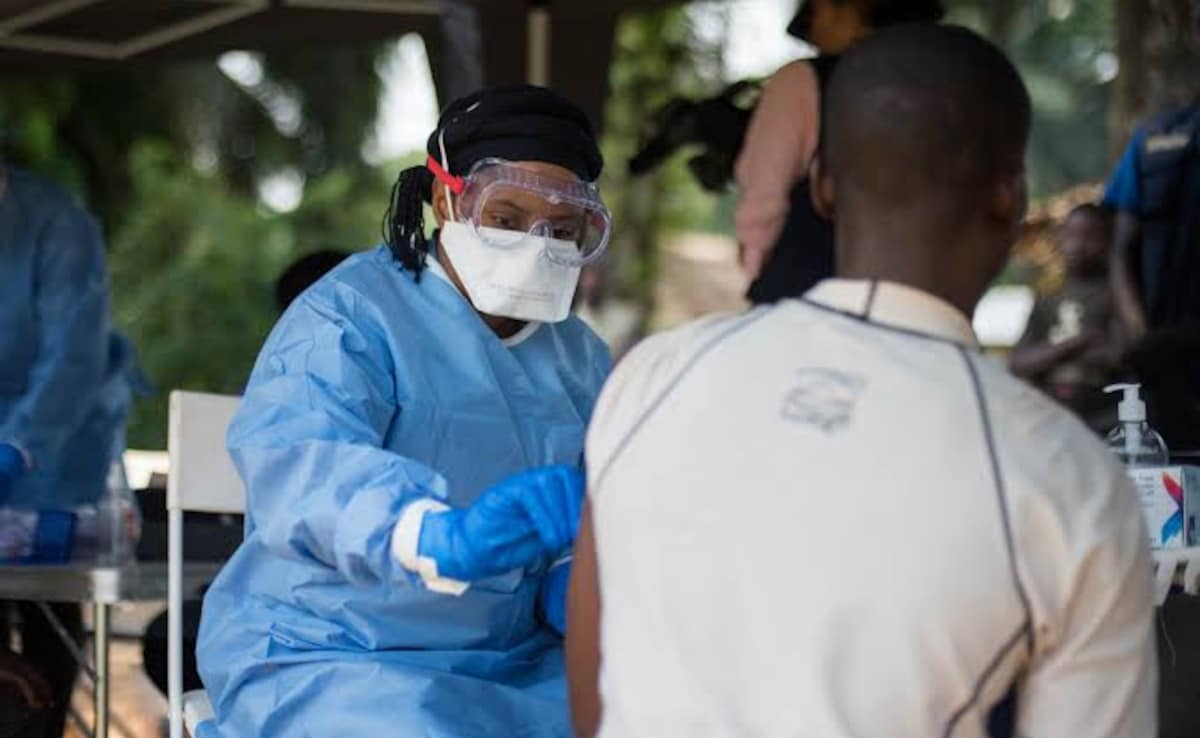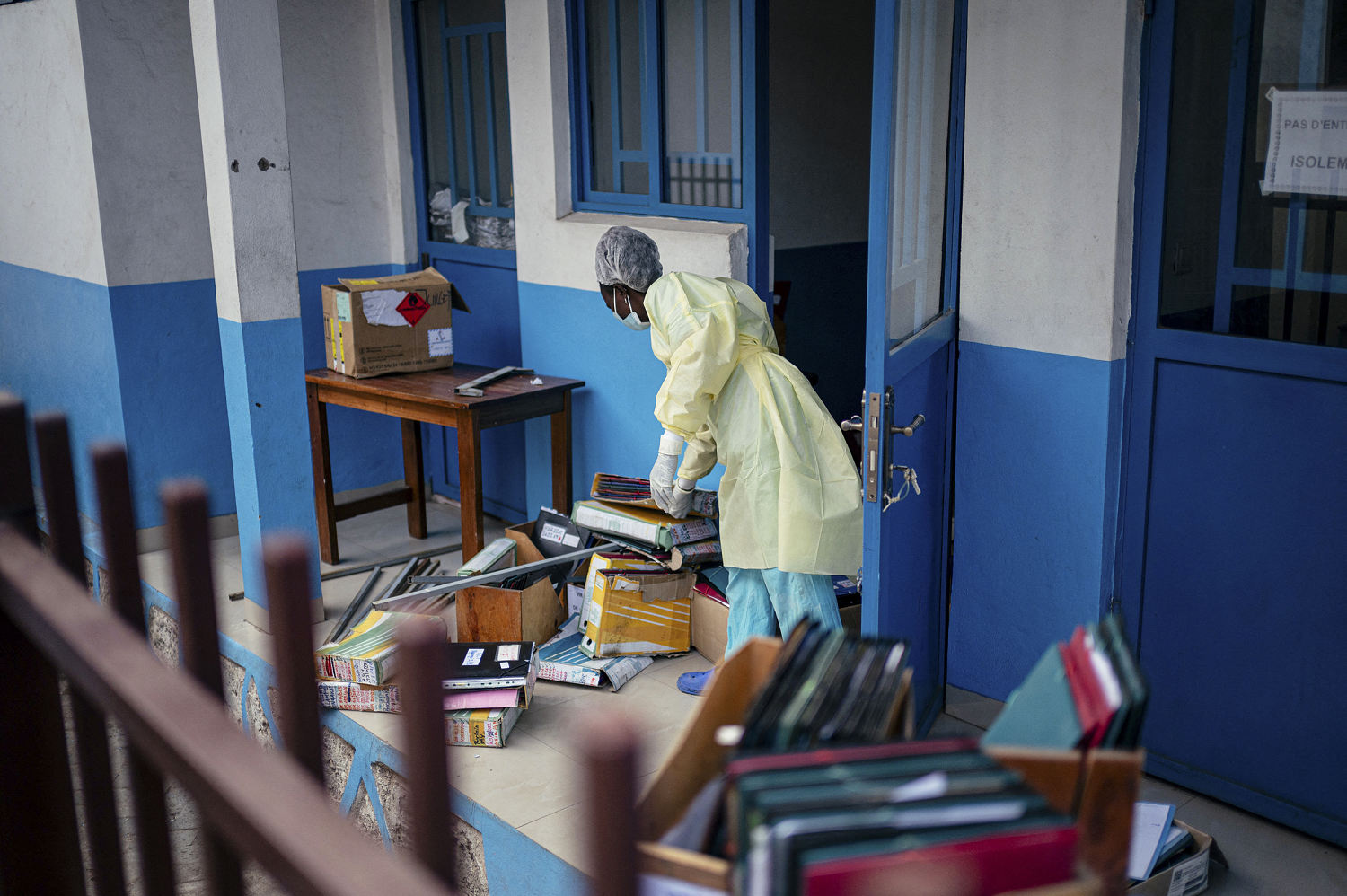
The corporate media machine has found its latest engine of anxiety: a newly declared Public Health Emergency of International Concern. The World Health Organization just sounded the alarm over an Ebola outbreak in the Democratic Republic of the Congo and Uganda, caused by the Bundibugyo strain. Right on cue, major news outlets are churning out breathless headlines about "mounting global alarm" and dramatic, state-sponsored relocations of American personnel back to U.S. soil.
This reaction is wrong. It misdiagnoses the biological reality of the virus and demonstrates a fundamental misunderstanding of public health mechanics.
I have spent years analyzing global health security infrastructures and watching legacy institutions burn hundreds of millions of dollars chasing high-theatrics, low-probability pathogens while ignoring systemic vulnerabilities. The true danger here is not a catastrophic domestic outbreak of a hemorrhagic fever. The danger is the predictable, short-sighted playbook the West deploys every single time a filovirus rears its head: xenophobic border tightening, performative evacuations, and structural resource extraction that leaves the epicenter more vulnerable than before.
The Fallacy of "Global Alarm"
Let's dissect the primary driver of the current panic. Cable news anchors are visibly shivering over the fact that there are no FDA-approved vaccines or specific antiviral therapeutics for the Bundibugyo strain. For the Zaire ebolavirus strain, we have highly effective options like the Ervebo vaccine. For Bundibugyo, we have empty shelves.
This absence of a vaccine is being framed as an apocalyptic security loophole. It isn't.
Ebola is fundamentally terrible at causing global pandemics. Unlike respiratory pathogens that spread silently via asymptomatic aerosol transmission, Ebola requires direct contact with infected bodily fluids—blood, vomit, feces—of a patient who is already showing severe symptoms. You cannot catch Bundibugyo because someone sneezed near you in an airport terminal.
The primary tool for stopping an Ebola outbreak has never been a syringe; it is basic, rigorous, unglamorous epidemiology.
- Aggressive contact tracing to map transmission chains.
- Rapid isolation of symptomatic individuals.
- Infection prevention and control (IPC) protocols in local clinics.
- Safe and dignified burials to stop post-mortem transmission.
When public health teams are properly funded and structurally supported, these classic interventions crush outbreaks with mathematical certainty, regardless of vaccine availability. The 2007 Bundibugyo outbreak in Uganda was contained precisely this way. Treating the absence of a pharmaceutical magic bullet as a declaration of global vulnerability is a lazy narrative designed to sell clicks, not protect lives.
The Counter-Productive Spectacle of Relocation
The moment a pathogen makes western headlines, the immediate political reflex is to pull up the drawbridge. The U.S. government's highly publicized push to relocate and isolate exposed Americans in specialized containment units across California, Texas, Georgia, and Nebraska is a masterclass in political theater.
It accomplishes two deeply damaging things:
First, it drains elite medical and logistical resources away from the primary theater of operation—the Ituri Province in eastern DRC. Every transport aircraft, every high-level epidemiological coordinator, and every million-dollar containment module deployed to move a handful of low-risk Westerners is a resource stolen from the front lines where 88 people have already died.
Second, it reinforces a toxic post-colonial dynamic of extraction. Western nations routinely parachute into epidemic zones, collect viral genomic data, evacuate their own citizens the moment things get difficult, and leave local healthcare workers to absorb the brunt of the mortality shock.
If the objective is truly to minimize global risk, the math is simple: a dollar spent stabilizing a clinic in Bunia or Mongbwalu is infinitely more effective than a dollar spent running a performative quarantine operation in Atlanta. You stop a fire by dumping water on the spark, not by building a fireproof bunker three thousand miles away.
The Real Crisis is the Containment Paradox
The World Health Organization explicitly warned governments against closing borders or shutting down international trade routes. Yet, like clockwork, unilateral travel restrictions are being drafted behind closed doors in Western capitals.
This brings us to the core structural mechanics of outbreak management: the containment paradox.
Imagine a scenario where a country experiencing a localized outbreak is completely cut off from international transit and economic trade. What happens next? The local economy collapses. Public trust in health authorities evaporates because cooperation is punished with economic strangulation.
Most importantly, the movement of people does not stop; it simply goes underground.
Instead of travelers passing through formal border checkpoints in Kampala or Kinshasa where health workers can conduct thermal screening, check travel histories, and monitor symptoms, people begin utilizing informal, unmonitored border crossings. The state loses all visibility. The virus spreads faster, quieter, and further because the system forced it into the shadows.
[Strict Border Closures]
       │
       ▼
[Closure of Formal Checkpoints]
       │
       ▼
[Surge in Informal Border Crossings]
       │
       ▼
[Complete Loss of Epidemiological Visibility]
Our current institutional strategy focuses entirely on the biological threat of the virus while ignoring the predictable sociology of human behavior under duress.
Dismantling the Panic Premise
Let us address the questions currently dominating public search trends, stripped of bureaucratic sanitization:
Is the U.S. at risk of a major Ebola outbreak?
No. The Centers for Disease Control and Prevention (CDC) has repeatedly stated that the risk to the general domestic public remains exceptionally low. Even if an infected traveler lands on American soil, our baseline public health infrastructure—sanitation, private clinical rooms, readily available personal protective equipment—renders sustained community transmission functionally impossible.
Why isn't there a vaccine for this strain yet?
Because the pharmaceutical market operates on capitalistic incentives, not moral imperatives. Outbreaks of the Bundibugyo strain are rare, self-limiting, and occur predominantly in impoverished regions. Major pharmaceutical companies have zero financial incentive to spend hundreds of millions of dollars taking a Bundibugyo candidate through clinical trials when there is no permanent, high-margin market for it.
What actually works to stop this?
Unconditional, direct financial and material support to local health zones. This means ensuring healthcare workers in eastern DRC have stable supplies of gloves, clean water, and basic supportive therapies like intravenous fluids. The Bundibugyo strain has a case-fatality rate hovering around 30% to 50%. Aggressive, early oral and intravenous rehydration therapy alone can slash that mortality rate in half. You don't need a cutting-edge laboratory to save these lives; you need reliable supply chains.
The Cost of Looking the Wrong Way
The downside to this contrarian view is obvious: it requires political courage. It requires elected officials to stand before an anxious public and explain why sending millions of dollars in medical supplies to central Africa is a better national security strategy than banning flights or setting up domestic quarantine centers. It requires admitting that our domestic health security is entirely dependent on the structural strength of foreign health systems we routinely neglect.
While the media cycle fixates on the cinematic imagery of biohazard suits landing at domestic airbases, the structural integrity of global health continues to erode. We are reacting to a pathogen that is difficult to transmit with an excess of panic, while systematically underfunding the foundational, everyday community health networks that actually keep global populations safe.
Stop watching the planes land. Start watching the clinics on the ground. The outbreak will be won or lost in the health zones of Ituri, not in the isolation wards of Nebraska.