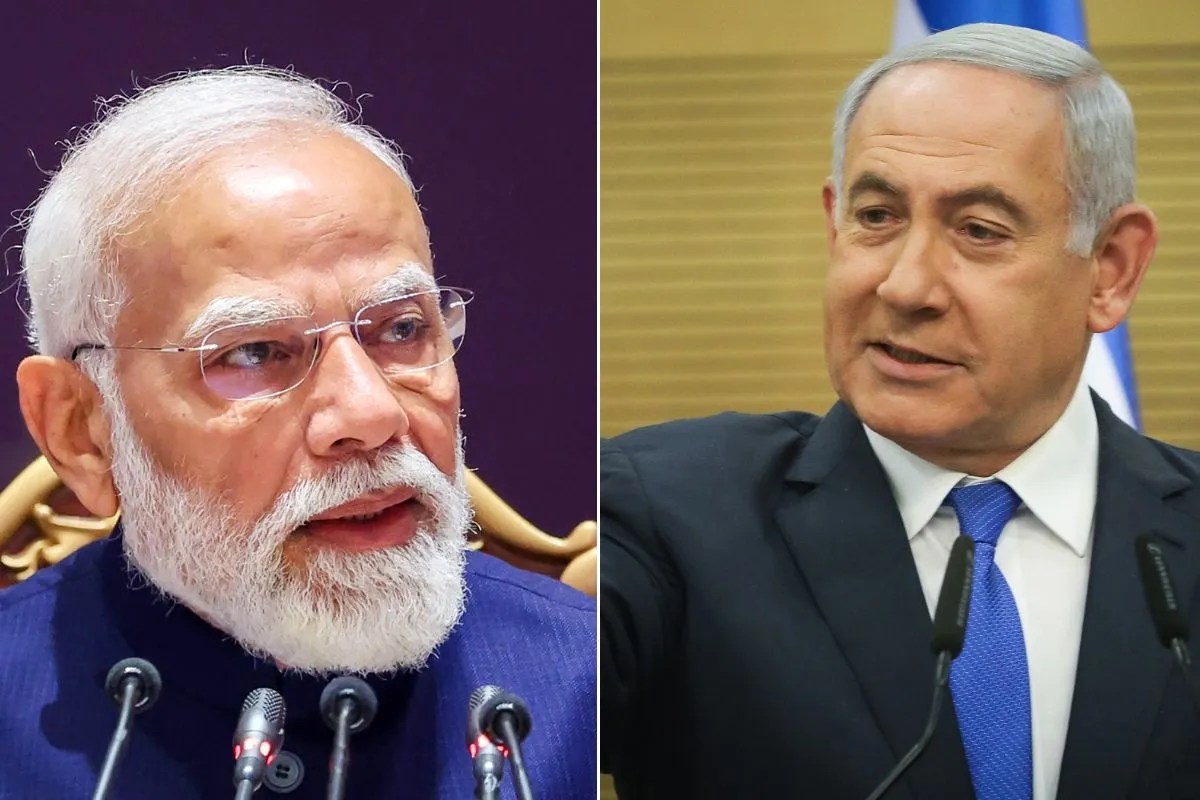
Benjamin Netanyahu’s invitation to Narendra Modi amid escalating hostilities with Iran is not a gesture of diplomatic sentimentality; it is a calculated deployment of geopolitical signaling designed to manipulate the escalatory ladder. By analyzing the timing, the specific nature of the Indo-Israeli defense architecture, and the domestic political constraints of both leaders, we can decode the strategic intent behind this outreach. The invitation serves three distinct functions: legitimizing pre-emptive kinetic action, testing the "strategic autonomy" of a rising global power, and securing a reliable supply-chain backstop for a prolonged multi-front conflict.
The Triad of Strategic Intent
The engagement between Jerusalem and New Delhi operates within a framework of high-stakes signaling. Netanyahu’s outreach precedes specific escalatory cycles, suggesting a premeditated attempt to anchor Israel’s position within the "Global South" narrative that India currently champions. Also making waves lately: The Kinetic Deficit Dynamics of Pakistan Afghanistan Cross Border Conflict.
1. The Legitimacy Buffer
Israel face a persistent "legitimacy deficit" in international forums, particularly within the UN General Assembly. By bringing the leader of the world’s most populous democracy into the physical space of the conflict, Israel attempts to bypass Western-centric alignment. The goal is to frame Israeli defensive or offensive maneuvers not as an isolated regional skirmish, but as a necessary action supported—or at least understood—by a non-aligned superpower.
2. Kinetic Supply Chain Resilience
Modern warfare is a war of attrition regarding precision-guided munitions and high-tech components. India has evolved from a mere buyer of Israeli defense tech to a co-developer and manufacturing hub. Further information into this topic are explored by The Guardian.
- Joint Ventures: The production of MRSAM (Medium Range Surface-to-Air Missiles) and the manufacture of Hermes 900 drones in Hyderabad provide Israel with a "shadow factory" capacity.
- The Human Capital Variable: With a significant portion of Israel’s tech and industrial workforce mobilized in reservist units, Indian technical collaboration ensures the continuity of maintenance and logistical flows.
3. The Iran-India-Israel Paradox
Netanyahu’s invitation forces India to navigate a "Zero-Sum Bottleneck." India maintains a critical interest in the Iranian port of Chabahar as a gateway to Central Asia, yet it relies on Israeli technology for border surveillance and counter-terrorism. By inviting Modi, Netanyahu seeks to tilt this balance, compelling New Delhi to prioritize its security partnership with Israel over its logistical partnership with Tehran.
Quantifying the Defense Interdependency
The relationship is underpinned by a hard-coded military-industrial complex. Israel is India’s second-largest defense supplier, but the qualitative nature of this trade is what defines the current crisis response.
- Intelligence Integration: The sharing of ELINT (Electronic Intelligence) and COMINT (Communication Intelligence) regarding non-state actors in the Middle East provides India with a blueprint for its own northern border challenges.
- The Drone Ecosystem: Israeli-designed UAVs (Unmanned Aerial Vehicles) are the backbone of Indian surveillance. In a full-scale war with Iran, Israel requires the rapid scaling of parts—scaling that Indian manufacturing facilities are now equipped to handle.
- Cyber-Offensive Parity: Both nations face state-sponsored cyber threats from the same regional actors. Collaborative defense in the digital theater acts as a force multiplier that standard diplomatic ties cannot replicate.
The Strategic Autonomy Pressure Test
For India, the invitation is a trap as much as it is a tribute. Prime Minister Modi’s "Strategic Autonomy" doctrine dictates that India does not join formal military alliances. Accepting an invitation during an active war would be interpreted as a de facto alignment with the Israeli-American axis, potentially jeopardizing India’s energy security and the safety of its 9 million-strong diaspora in the Gulf.
The Cost-Benefit Calculus of Indian Neutrality
If India tilts too far toward Israel, it risks:
- Energy Disruption: Reliance on the Strait of Hormuz makes India vulnerable to Iranian naval posturing.
- Diaspora Vulnerability: Hostility in the Arab world could lead to economic or physical insecurity for Indian workers in the GCC.
- BRICS Fragmentation: As a leading member of BRICS, India must balance its ties with Western-aligned Israel against the interests of Russia and China, both of whom maintain a closer orbit to Tehran.
Netanyahu is aware of these constraints. The invitation, therefore, is an exercise in "forced proximity." Even if the visit does not materialize, the mere publicization of the request creates a perception of closeness that complicates Iran’s diplomatic maneuvering. It forces Tehran to wonder if India has provided quiet assurances to Jerusalem regarding intelligence or logistical support.
Logistical Architecture of the Indo-Abrahamic Fold
The shift from the "I2U2" (India, Israel, USA, UAE) group to a direct bilateral kinetic understanding represents a narrowing of focus. The broader economic corridors, such as IMEC (India-Middle East-Europe Economic Corridor), are currently dormant due to regional instability. Consequently, the relationship has regressed to its primary state: a security-first partnership.
The mechanism of this partnership is not found in public statements but in the "Technical Exchange Agreements." These allow for the rapid transfer of sensor data and the synchronization of missile defense logic. If Israel is to engage in a long-range exchange with Iran, the ability to utilize neutral or friendly data nodes across the Indian Ocean provides a tactical advantage in tracking ballistic trajectories.
Structural Barriers to Indian Intervention
Despite the high-level chemistry between the two leaders, structural realities prevent India from moving beyond "supportive neutrality."
- The Maritime Constraint: The Indian Navy’s primary directive is the security of the Indian Ocean Region (IOR). Diverting assets or political capital to the Levantine theater offers no immediate return on investment for Indian national security.
- The Domestic Electoral Cycle: In a democratic system, the optics of being embroiled in a Middle Eastern war are radioactive. Modi’s mandate is built on domestic economic "Vikas" (Development), which is highly sensitive to the oil price shocks that a direct Iran-Israel war would trigger.
- Technological Sovereignty: India is currently pushing for "Atmanirbhar Bharat" (Self-Reliant India). While Israel is a key partner, India is wary of becoming over-dependent on Israeli proprietary software for its critical defense infrastructure.
Mapping the Escalation Ladder
Netanyahu’s strategy follows a classic deterrence model. By signaling a deep partnership with India, he is attempting to increase the "Cost of Aggression" for Iran. The logic follows that if Iran perceives Israel as part of a broader, more resilient network that includes an emerging global titan like India, the psychological barrier to a sustained conflict increases.
However, this logic assumes that Iran views India as a potential belligerent, which is unlikely. Instead, the real value for Israel is Passive Deterrence: ensuring that India does not use its influence in the Global South to lead a diplomatic or economic boycott of Israel.
The Mechanism of Passive Deterrence
- Abstention as Support: In international bodies, an Indian abstention is often as valuable to Israel as a "Yes" vote, as it breaks the consensus of developing nations against Israeli policy.
- Diversion of Iranian Focus: Iran must expend diplomatic energy maintaining its relationship with New Delhi, energy that would otherwise be spent consolidating its regional "Axis of Resistance."
The Strategic Play
The invitation to Modi should be viewed as a tactical maneuver within a broader theater of psychological warfare. Israel is currently operating under a "Multi-Front Doctrine" which necessitates the outsourcing of non-combat support.
India’s role is that of the Global Stabilizer. By maintaining a line of communication with both Jerusalem and Tehran, New Delhi acts as a potential "Backchannel of Last Resort." Netanyahu’s invitation is an attempt to co-opt that backchannel, ensuring that if and when mediation occurs, the mediator (India) is deeply invested in Israeli security through its military-industrial ties.
The immediate move for India is to maintain the status quo: provide the material components required by existing contracts, continue intelligence sharing on a restricted basis, but decline any high-profile visit until the kinetic phase of the conflict stabilizes. For Israel, the "win" is not the visit itself, but the public acknowledgment of the invitation, which serves as a reminder to the region that Israel’s isolation is a Western myth, not a global reality.
Strategic players should monitor the export licenses of Indian defense firms over the next fiscal quarter. A surge in "dual-use" component exports to Israel will be the true indicator of India’s alignment, far more telling than any diplomatic communique or prime ministerial handshake.