The Met Office loves a good headline about "the wettest winter since 1836." It makes for great push notifications and justifies the inevitable hike in your water bill. But if you think the UK is drowning because of a few extra millimeters of rain, you’ve been sold a narrative that confuses weather with infrastructure failure.
We aren't suffering from a rain problem. We are suffering from a chronic, systemic inability to handle a resource that literally falls from the sky for free.
The media fixates on the anomaly—the deviation from a thirty-year mean. They tell you that parts of England saw 150% of their average rainfall and expect you to gasp. But "average" is a mathematical ghost. In a maritime climate defined by volatility, the only thing that should be "average" is our readiness. Instead, we treat every wet winter like a "black swan" event, ignoring the fact that our Victorian-era drainage is screaming for mercy under the weight of 21st-century over-development.
The Precipitation Fallacy
The "wettest on record" trope is the ultimate get-out-of-jail-free card for regional authorities and water monopolies. By framing the conversation around record-breaking climate data, they shift the blame from human incompetence to "unprecedented" nature.
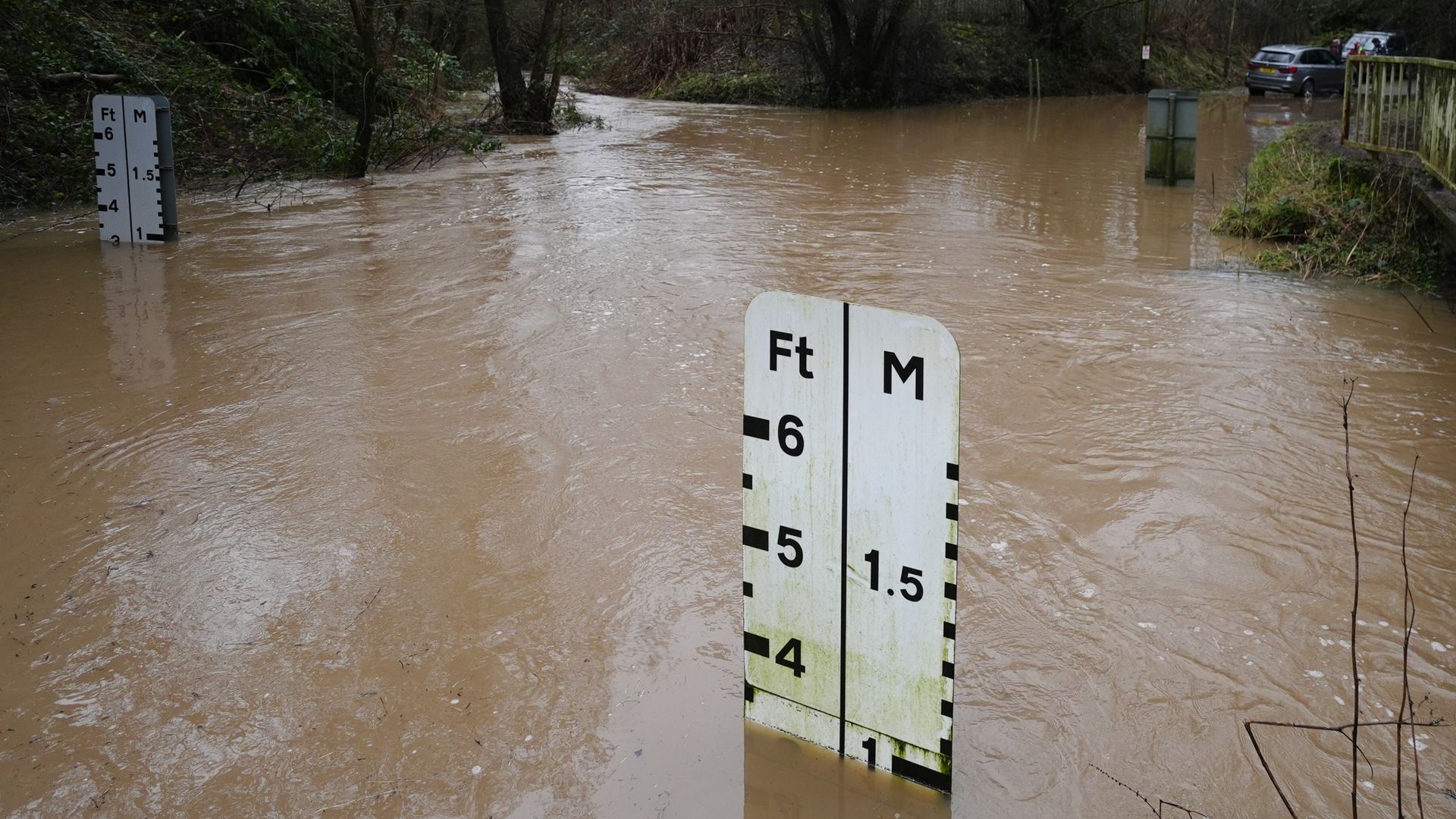
Here is the data they don't lead with: The total volume of water falling on the UK hasn't actually shifted as radically as the headlines suggest. What has shifted is the intensity and the location. When the Met Office reports a record, they are often looking at localized gauges. While a specific field in South Yorkshire might be under two feet of water, the national storage capacity remains embarrassingly low.
We capture less than 1% of our annual rainfall. We are an island nation that suffers from drought warnings three months after a "record-breaking" flood. That isn't a climate crisis; that's a logistical embarrassment.
The Concrete Tsunami
We have paved over the sponges. I’ve spent years looking at urban planning layouts where "permeable surfacing" is treated as an optional luxury rather than a survival requirement. Every time a developer replaces a garden with a driveway or a meadow with a retail park, the hydrograph of the local river changes.
The water doesn't soak in anymore. It hits the asphalt, picks up speed, and slams into a Victorian sewer system that was designed when the population of London was a fraction of what it is today.
Why Your "Flood Defense" is Making it Worse
We have an obsession with "hard" engineering. We build concrete walls to keep rivers in their tracks, which simply accelerates the flow of water downstream to the next unlucky town. It’s a zero-sum game of passing the buck.
- Linear Thinking: If the river overflows, build the wall higher.
- The Reality: This increases the kinetic energy of the water. When a wall eventually fails—and they always fail—the resulting damage is catastrophic rather than manageable.
True water management involves slowing the flow. This means re-wiggling rivers, re-introducing beavers (the world's best unpaid hydraulic engineers), and creating floodplains that are actually allowed to flood. But you can't build a luxury apartment complex on a functional floodplain, so we pretend the record-breaking rain is the villain.
The Myth of the "1-in-100 Year" Event
Insurance companies and government agencies love the phrase "1-in-100-year flood." It sounds like a rare, unavoidable tragedy. In reality, this is a statistical probability ($P = 0.01$) that can happen two years in a row.
By using this language, the "consensus" suggests that once the "record" is hit, we are safe for another century. It’s a lie. The historical record is a rearview mirror that is increasingly fogged up. We are using 20th-century probability models to manage a 21st-century atmosphere.
If we were serious about these records, we would stop building on land that the Met Office’s own maps show is at risk. Instead, we grant planning permission and then express "shock" when the living rooms of those new builds are filled with silt.
The Data Gap
The Met Office’s HadUK-Grid data is excellent, but it’s being used to tell the wrong story. It’s being used to generate "weather porn" for news cycles rather than driving a radical overhaul of our national storage strategy.
We haven't built a major new reservoir in the UK in over thirty years. Think about that. While we complain about the "wettest winter," we have no way to hold onto that water for the summer. We let it wash away our topsoil, overwhelm our sewage plants, and dump raw waste into our coastal waters, only to face hosepipe bans in July.
The Real Cost of Record Rainfall
The cost isn't just the damage to property. It’s the $£2$ billion plus spent annually on reactive "emergency" measures that don't solve the underlying issue. We are stuck in a cycle of:
- Panic: When the "record" is broken.
- Pity: When the cameras show flooded kitchens.
- Procrastination: When the water recedes and the budget for infrastructure is moved to a more "visible" project.
Stop Blaming the Clouds
The next time you see a headline about "record rainfall," ignore the meteorological trivia. Look at the drainage. Look at the lack of investment in gray-water recycling. Look at the way we treat our rivers like glorified gutters.
The rain is just doing what rain does. It follows gravity. If it ends up in your basement, it’s not because the weather is "unprecedented"—it’s because the people in charge of the maps and the pipes haven't done their jobs since the 1970s.
We don't need more weather reports. We need a national plumbing upgrade.
Until we stop treating water as a nuisance to be drained away as fast as possible and start treating it as a volatile asset to be captured, we will continue to be "surprised" by the seasonal reality of living on a rock in the North Atlantic.
Stop checking the barometer and start looking at the planning office. That's where the real disaster is happening.