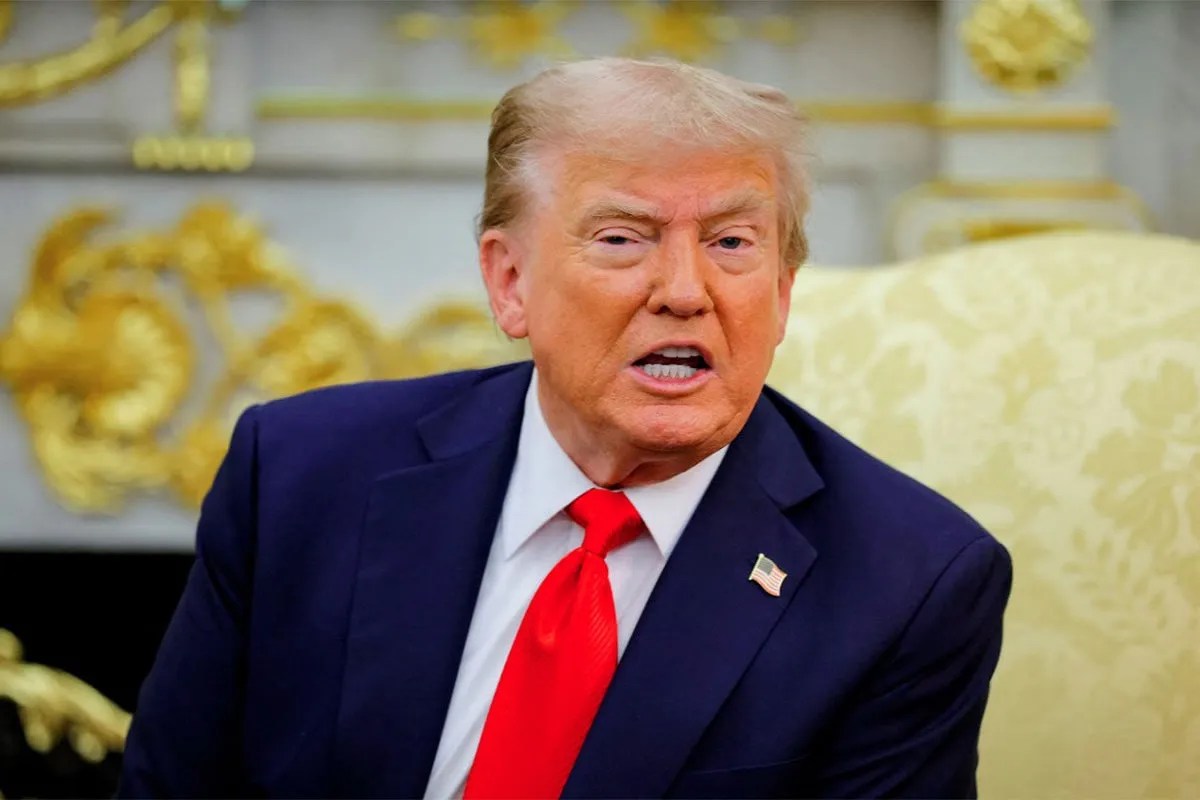
Donald Trump does not want a long-term war with Iran. This is not a matter of pacifism or a sudden shift in his "maximum pressure" ideology, but rather a cold calculation of political survival and economic stability. Sources close to the administration suggest that while the rhetoric remains heated, the President has explicitly warned his advisors against stumbling into a "forever war" that could sink the domestic economy. He remembers the quagmires of the early 2000s. He knows that a spike in global oil prices, triggered by a closed Strait of Hormuz, would act as an immediate tax on the American consumer.
The tension in the Middle East has reached a boiling point where one misstep could ignite a regional conflagration. Yet, the internal memo in Washington is clear: strike hard if provoked, but avoid the boots-on-the-ground commitment that defined the Bush and Obama eras. Trump views the Iranian problem through the lens of a deal-maker who is currently out of leverage. He wants the Iranian leadership to blink, but he is increasingly wary that his own "hawks" are pushing for a script that ends in a full-scale invasion.
The Mirage of Maximum Pressure
The strategy of "maximum pressure" was designed to starve the Iranian regime of resources until it had no choice but to negotiate a more restrictive nuclear deal. It has succeeded in crippling the Iranian rial and slashing oil exports. However, it has failed to change the fundamental behavior of the Islamic Revolutionary Guard Corps (IRGC). Instead of retreating, Tehran has leaned into its "forward defense" strategy, using proxies in Iraq, Lebanon, and Yemen to signal that if they go down, they will take the region's stability with them.
Trump is reportedly frustrated that the economic squeeze hasn't produced a "grand bargain" yet. He prefers the high-stakes theater of a summit—much like his approach with North Korea—over the tedious, bloody reality of urban warfare in the Zagros Mountains. The geography of Iran makes a ground invasion a logistical nightmare that would dwarf the Iraq War. We are talking about a country with three times the landmass and twice the population of Iraq, with a terrain that favors the defender.
The Advisor Divide
Inside the West Wing, a quiet battle is being waged for the President's ear. On one side are the traditional interventionists who believe that the Iranian clerical establishment is on the verge of collapse and only needs a final kinetic push. They argue that limited strikes on nuclear facilities or IRGC hubs would not necessarily lead to total war.
On the other side are the "America First" realists. They remind the President that he was elected to end wars, not start new ones. This faction points to the 2024 and 2026 election cycles as the ultimate barometer. No president has ever benefited from a draft or a massive influx of flag-draped coffins just before an election. Trump’s instinct is to keep the conflict in the realm of "gray zone" warfare—cyberattacks, economic sanctions, and clandestine operations—rather than overt military campaigns.
The Strait of Hormuz Factor
Any sustained conflict with Iran immediately threatens the world's most vital oil transit point. Roughly 20% of the world's total oil consumption passes through the Strait of Hormuz. If Iran follows through on its threat to block the waterway, even temporarily, the global markets would go into a tailspin.
For a president who equates the health of the stock market with his own performance, a $150 barrel of oil is a nightmare scenario. It would wipe out the gains of his tax policies and likely trigger a global recession. Iran knows this. Their "Asymmetric Doctrine" is built on the premise that they don't need to win a conventional battle against the US Navy; they only need to make the cost of American involvement unacceptably high for the American voter.
The Drone Wars and Attribution
The shift in modern warfare has allowed both sides to poke at each other without officially crossing the line into total war. The use of loitering munitions and high-altitude surveillance drones creates a persistent state of friction. When a drone is shot down, it’s a loss of millions of dollars, but not a loss of life. This "bloodless" escalation allows Trump to look tough on social media while avoiding the political fallout of American casualties.
The danger lies in the "accidental" escalation. In a theater as crowded as the Persian Gulf, a nervous sonar operator or a misidentified radar blip can change the course of history in seconds. Trump has expressed skepticism about the "intelligence" that leads to these flashpoints, often recalling the faulty justifications used for the 2003 invasion of Iraq. He is inherently distrustful of the "deep state" bureaucracy that he believes is trying to trap him in a conflict he didn't sign up for.
The Israeli Variable
Prime Minister Benjamin Netanyahu remains the most influential external voice in this equation. Israel views a nuclear-capable Iran as an existential threat and has shown a willingness to act unilaterally. This puts Washington in a difficult position. If Israel strikes Iranian nuclear sites at Natanz or Fordow, the US is effectively drawn into the retaliation cycle whether it wants to be or not.
The coordination between Washington and Jerusalem is tighter than ever, but there is a growing gap in their "endgame" visions. Israel wants the regime changed or its nuclear capabilities permanently dismantled. Trump wants a signature on a piece of paper that he can hold up as a victory for his base. This misalignment is where the greatest risk of a long-term war resides.
The Economic Toll of a Stalemate
Sanctions are a slow-acting poison. While they have hollowed out the Iranian middle class, the ruling elite has mastered the art of "sanction evasion" through a complex network of front companies in Dubai, Turkey, and China. This has created a stalemate. Iran is too weak to flourish but too strong to collapse.
Trump’s advisors have reportedly told him that the "wait and see" approach might not work indefinitely. As Iran increases its uranium enrichment levels in response to the pressure, the window for a "peaceful" resolution shrinks. The President's private comments suggest he is looking for an "exit ramp"—a way to de-escalate without looking weak. He has hinted at a willingness to provide economic incentives if Tehran agrees to a broader deal that includes their ballistic missile program.
The Role of China and Russia
One factor often overlooked in the domestic US debate is how Beijing and Moscow benefit from a prolonged US-Iran standoff. Every dollar and hour the US spends focused on the Persian Gulf is a dollar and hour not spent on the "Pivot to Asia" or the defense of Eastern Europe.
China, in particular, has become Iran’s economic lifeline, signing a 25-year strategic partnership agreement. They are buying Iranian oil at a discount, paid for in Yuan, further eroding the dominance of the US Dollar in global energy markets. For Trump, the "Big Picture" involves the trade war with China, and he is loath to let a regional power like Iran distract from that primary objective.
Tactical Restraint vs. Strategic Ambiguity
Trump’s unpredictability is his favorite tool. By keeping everyone—including his own generals—guessing about his next move, he believes he maintains the upper hand. But ambiguity has its limits. In the world of nuclear deterrence, clarity is often the only thing preventing a catastrophe.
The Iranians have decoded part of the Trump playbook: they know he hates casualties and loves the economy. Consequently, they have calibrated their provocations to hit where it hurts—commercial shipping and regional allies—rather than directly targeting US bases in a way that would force a massive retaliation. This "tit-for-tat" cycle could last for years, which is itself a form of a "long war" even if it doesn't involve a ground invasion.
The President’s recent private conversations indicate a man who is tired of the Middle East. He views the region as a "sinkhole" for American blood and treasure. He wants the Gulf states to take more responsibility for their own security. "Why are we protecting the shipping lanes for China and Japan for free?" is a question he has asked repeatedly in the Situation Room.
The Brink of the Abyss
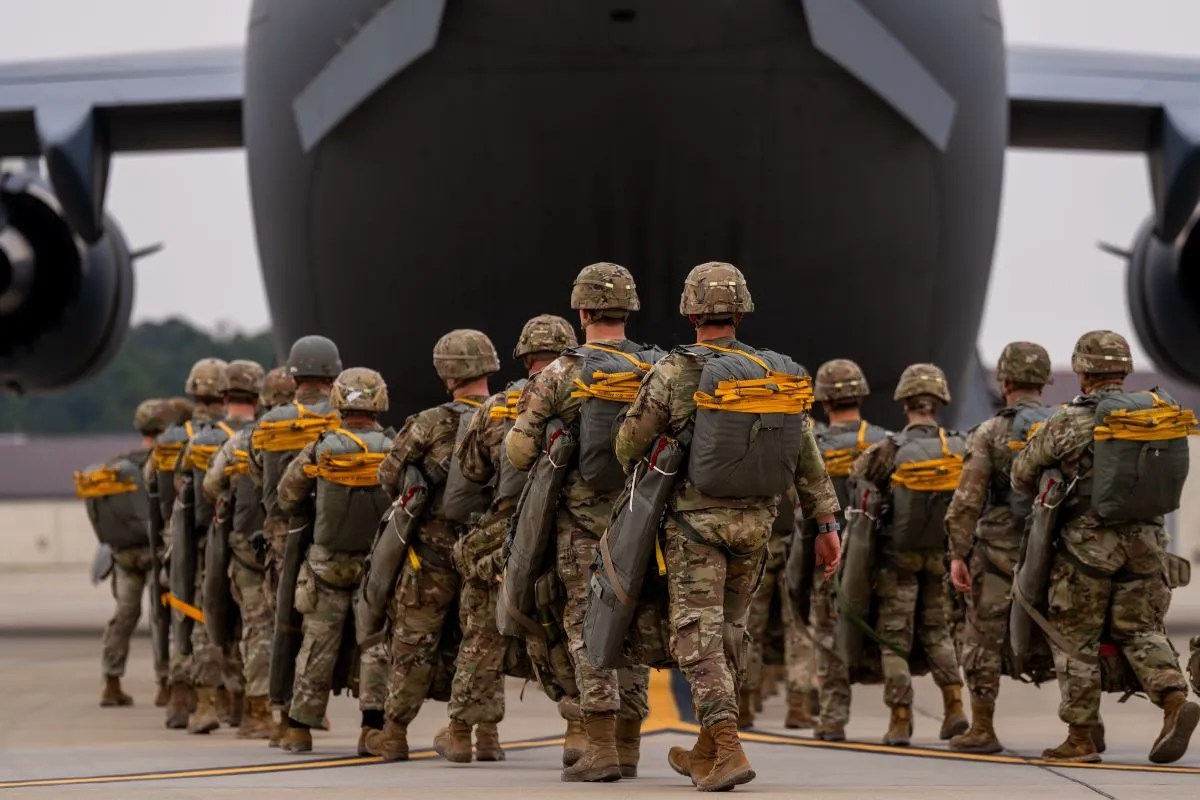
Despite the desire for restraint, the path to war is often paved with good intentions and bad intelligence. If Iran or one of its proxies kills a significant number of American service members, Trump’s political hand will be forced. He cannot be the "tough guy" who let Americans die without a response. At that point, the "long war" he fears becomes an inevitability.
The current strategy is a high-wire act with no safety net. Trump is betting that he can squeeze Iran until they break, without them lashing out so hard that he has to break them himself. It is a gamble on the rationality of a regime that feels it has its back against the wall. History shows that cornered actors rarely make the rational choice.
The real story isn't that Trump is "soft" on Iran, but that he is terrified of the ghost of 2003. He doesn't want to be the president who inherited a booming economy and handed over a nation bogged down in a multi-trillion dollar desert conflict. He wants the win, he wants the photo op, and he wants the oil to keep flowing. Anything that threatens that trinity is a non-starter.
Monitor the deployment of carrier strike groups. If they stay in the Arabian Sea rather than entering the Gulf, the President's preference for containment over combat remains the dominant policy.