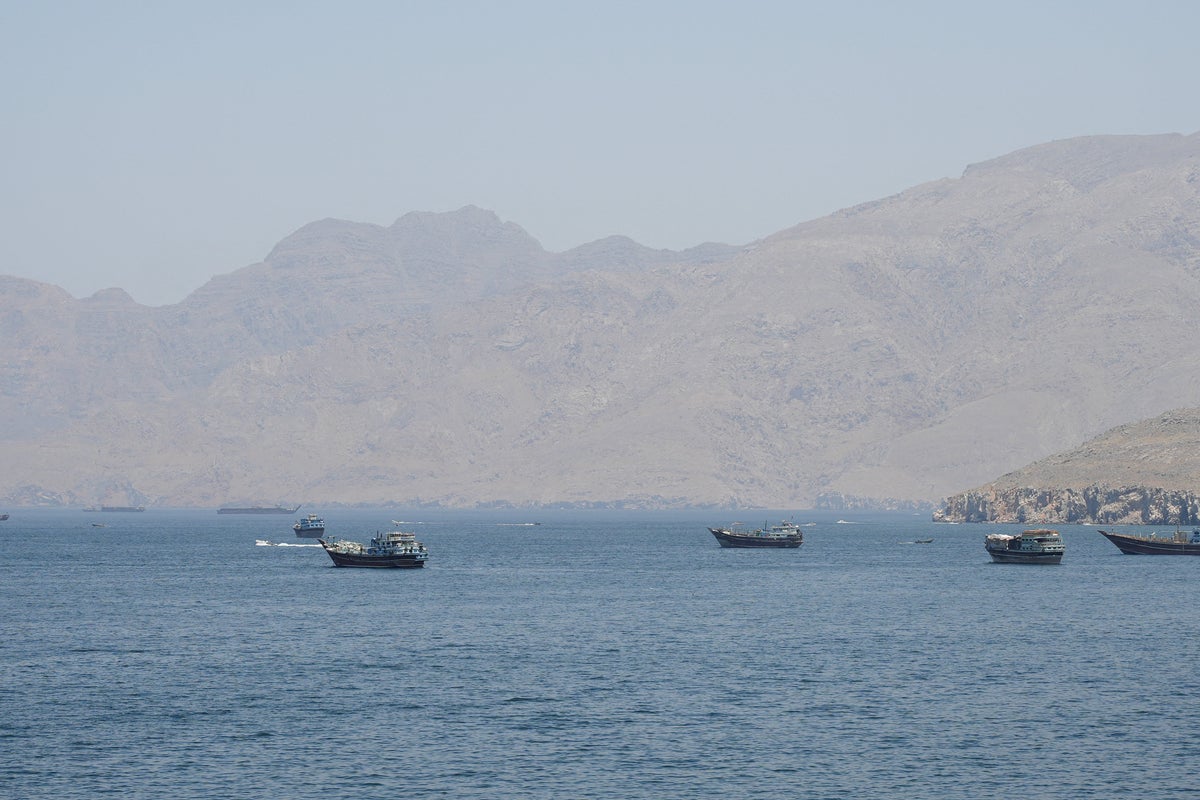
The Mediterranean Sea is supposed to be a bridge, a shimmering expanse of turquoise that connects the cradles of civilization. But for several hundred souls aboard a small fleet of ships, it became a cage. It was late May, the kind of weather where the salt air usually feels like a promise of freedom. Instead, it became the backdrop for a geopolitical collision that would leave the world breathless and the United Nations scrambling to pick up the pieces of international law.
The Iron Horizon
To understand the weight of a UN demand for release, you have to understand the silence of the open ocean. Imagine, hypothetically, that you are a volunteer. You aren't a soldier. You are a doctor from London, a grandfather from Istanbul, or a journalist with a camera slung over your shoulder. You are on a boat called the Mavi Marmara, part of a "Freedom Flotilla" carrying nothing more dangerous than bags of cement, medical supplies, and toys.
The goal is Gaza. The obstacle is a blockade that feels, to those on the outside, like an immovable object. Then comes the night. The humming of helicopter rotors drowns out the waves. Black-clad commandos descend on ropes. Chaos erupts. Flashbangs shatter the darkness. When the sun rises, nine activists are dead, dozens are wounded, and the survivors are not in Gaza. They are in a detention center in Beersheba, stripped of their passports, their phones, and their agency.
This is where the dry headlines fail us. They tell you that "UN demands Israel immediately releases flotilla activists." They don't tell you about the cold metal of the handcuffs or the sudden, jarring transition from the vastness of the sea to the four walls of a cell.
The Weight of the Gavel
In the halls of the United Nations in Geneva, the air is thick with a different kind of tension. It is the scent of old paper and the quiet intensity of people who believe that words can stop bullets. The UN Human Rights Council doesn't just "demand" things because they want to fill a news cycle. They do it because the machinery of international law is grinding to a halt.
When the Council voted to establish an independent international fact-finding mission, it wasn't a mere bureaucratic gesture. It was a desperate attempt to reassert a simple truth: that even in the middle of a bitter, decades-long conflict, there are lines you cannot cross. The demand for the "immediate release" of the nearly 700 activists was a scream for the restoration of the status quo.
The activists came from over 30 countries. This wasn't just a localized skirmish; it was a global incident contained within the hull of a ship. By holding them, Israel wasn't just stalling a convoy. It was holding citizens of the world, from Swedish novelists to members of the German parliament.
The Anatomy of a Blockade
Why would a state risk the blistering condemnation of the world's highest diplomatic body? The answer lies in the concept of "security," a word so broad it can justify almost anything. From the Israeli perspective, the flotilla wasn't a humanitarian mission. It was a provocation. They saw the cement as potential tunnels and the activists as shields for a hostile regime in Gaza.
But the UN's intervention shifted the lens. They looked at the proportionality. Is it legal to board a ship in international waters? Is it justifiable to use live ammunition against civilians, even if they resist with sticks and chairs? The UN's stance was clear: the detention of these people was an extension of an illegal blockade.
Consider the psychological toll. A volunteer named "Arif"—a composite of the many Turkish activists present—finds himself sitting on a thin mattress. He doesn't know where his friends are. He doesn't know if the world saw what happened on the deck. He is caught in a legal vacuum where his rights as a human being are being weighed against the strategic interests of a nuclear-armed state. The UN demand is the only thread connecting him back to the surface.
The Ripple Effect
Diplomacy is often mocked as a toothless exercise, a series of strongly worded letters sent into a void. Yet, watch what happens when those letters are signed by the international community. Turkey, once a close ally of Israel, withdrew its ambassador. The United States, usually a steadfast shield for Israel at the UN, found itself unable to provide the usual cover, opting instead for a "carefully worded" statement that allowed the demand for release to move forward.
The pressure didn't come from the guns on the ships. It came from the realization that you cannot disappear 700 people in the age of the 24-hour news cycle. The UN demand acted as a catalyst, turning a military "success" into a PR catastrophe.
The story of the flotilla activists is a story about the fragility of our global rules. If a ship in international waters can be seized and its passengers imprisoned without charge, then the "freedom of the seas" is just a phrase in a dusty textbook. The UN wasn't just fighting for the people in the cells; they were fighting for the idea that the ocean belongs to everyone, and that even the most powerful nations must answer to a higher standard.
The Long Walk to the Border
Eventually, the pressure becomes too much. The gates of the prison open. The activists are bussed to Ben Gurion Airport or the Jordanian border. They are tired. They are bruised. Some are carrying the bodies of their friends in coffins draped in flags.
They return to Istanbul, London, and Berlin to find themselves heroes to some and villains to others. But the "demand" from the UN remains on the record. It stays there as a marker, a historical footnote that reminds us that even when the world feels lawless, there is an office in Geneva where someone is still keeping count.
The ships are gone now. Some were towed to port, others sit rusting. The blockade of Gaza remains, a stubborn scar on the map. But for a few days in 2010, the entire world looked at a small patch of the Mediterranean and asked if might truly makes right. The UN's answer was a resounding "no," delivered not with a weapon, but with the collective voice of a planet that still dares to hope for a bridge instead of a wall.
The salt air still carries the memory of that night, a lingering reminder that the sea never truly forgets what happens on its watch.