The secure phone on a nightstand in Arlington doesn’t ring like a normal phone. It is a digital intrusion, a jagged sound designed to pierce the deepest REM cycle of a weary strategist. When that phone vibrated in the predawn hours, the air in the room changed. It wasn’t just a notification of a strike. It was the sound of a carefully constructed geopolitical architecture collapsing in real-time.
For months, the Biden administration had been walking a tightrope made of razor wire. The goal was simple but Herculean: keep the simmering conflict between Israel and Iran from boiling over into a global inferno that would incinerate oil markets and drag the West into a generational war. Diplomats had spent hundreds of hours whispering into encrypted handsets, drafting "red lines," and defining the exact parameters of "proportionality."
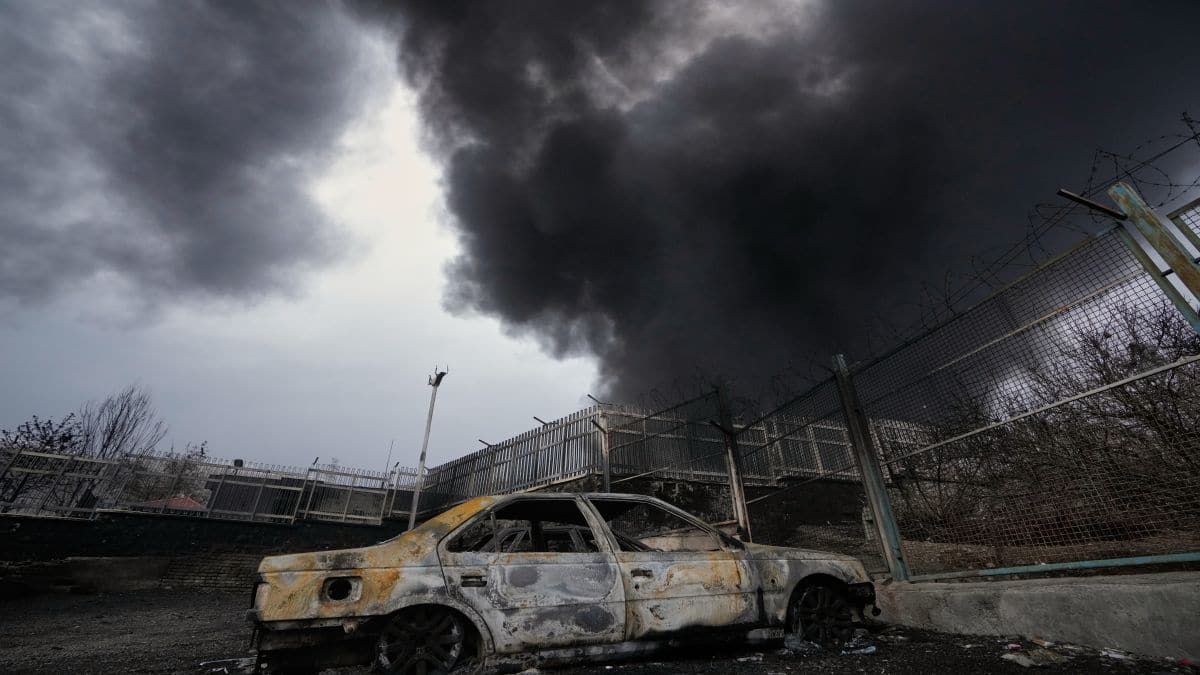
Then, the sky over Iran’s oil infrastructure turned orange.
Israel had moved. And according to the frantic cables later described by officials, the White House didn't just feel sidelined. They felt blindsided. The reported "WTF" message sent from the highest levels of the American security apparatus wasn't just a lapse in decorum. It was a visceral scream of realization that the junior partner in this alliance had decided to drive the car off the cliff to see if it could fly.
The Illusion of Control
We like to believe that global events are the result of grand, calculated masterstrokes. We want to think that men in suits sit in mahogany rooms and move pieces across a map with total foresight. The reality is far more human and far more terrifying. It is a game of broken telephone played with high-explosive ordnance.
Consider the "Deconfliction Line." This is the technical term for the digital umbilical cord between the Pentagon and the Israeli Defense Forces. It is supposed to ensure that no one gets surprised. But "surprise" is a subjective term in the Middle East. Israel’s perspective is forged in a different furnace than America's. For a strategist in Washington, an Iranian oil depot is a variable in a global economic equation. For a commander in Tel Aviv, it is the fuel tank of a machine dedicated to their extinction.
When the reports hit the wires that Israel had targeted Iranian oil facilities—territory the U.S. had explicitly signaled as "off-limits"—the betrayal wasn't just diplomatic. It was personal. Imagine working for eighteen months to prevent a specific disaster, only for your closest ally to hand you a match and a can of gasoline.
The "WTF" heard 'round the world was the sound of the superpower realizing it was no longer the one holding the leash.
The Invisible Ledger
Why does an oil depot in a desert thousands of miles away matter to a mother driving her kids to school in Ohio? Because the world is stitched together by invisible threads of crude.
When those facilities burn, the shockwaves don't stop at the Iranian border. They travel at the speed of light through high-frequency trading algorithms in Manhattan. Within seconds of the first explosion, the price of a barrel of Brent crude begins to twitch. This isn't abstract math. This is the "tax" that every human on earth pays for instability. It manifests in the price of a gallon of milk, the cost of a plane ticket, and the stability of retirement funds.
The White House knew this. They had pleaded with Israel to stick to military targets—radar installations, missile factories, the "hard" assets of the Revolutionary Guard. These are targets that send a message without collapsing the global economy. By veering toward the oil, Israel chose the "Economic Nuclear Option."
It was a gamble based on a singular, cold-blooded logic: Israel believes that the only way to stop a bully is to break his nose so badly he forgets how to swing. The U.S., meanwhile, is trying to manage the bully so the entire playground doesn't get shut down. These two philosophies collided on a Tuesday night, and the resulting friction left the Biden administration looking at a map they no longer recognized.
The Ghost in the Machine
To understand the weight of this moment, you have to look past the headlines and into the bunkers. There is a specific kind of silence that falls over a Situation Room when a partner goes rogue. It is the silence of an engine failing at thirty thousand feet.
The reports suggest that the U.S. was given "minutes" of notice. In the world of supersonic jets and ballistic trajectories, minutes are nothing. They are a courtesy, not a consultation. It is the diplomatic equivalent of telling your spouse you’ve sold the house while the moving truck is already backing into the driveway.
But there is a deeper layer to this friction. We are witnessing the birth of a post-American Middle East. For decades, the U.S. was the undisputed arbiter. If Washington said "don't," people generally didn't. But the "WTF" message signals a shift in the gravity of power. Israel, sensing a vacuum or perhaps an impending change in American leadership, decided that their survival outweighed their neighborly obligations to the White House's political calendar.
The Cost of the Unspoken
What happens when the "Red Line" becomes a suggestion?
The Iranian response is the variable that haunts every sleep-deprived analyst in Langley. If Israel hits the oil, Iran hits the tankers. If Iran hits the tankers, the Strait of Hormuz closes. If the Strait closes, the modern world grinds to a halt. We are talking about a cascade of failures that could leave cities dark and grocery shelves empty.
This is the human element that gets lost in the "standard" news cycle. We talk about "strikes" and "retaliation" as if they are moves in a chess game. We forget that the board is made of people.
Every time a missile is launched without coordination, the probability of a "fat finger" error increases. A pilot misidentifies a target. A radar operator panics. A civilian airliner is in the wrong place at the wrong time. This is the fog of war, and by bypassing the U.S. warning system, Israel essentially turned off the GPS and decided to drive by feel.
The Mirror of Trust
Trust is a currency that is incredibly hard to mint and embarrassingly easy to devalue. For years, the U.S.-Israel relationship was built on the bedrock of "no surprises." That bedrock is now a pile of gravel.
The White House’s reported frustration isn't just about the oil. It’s about the precedent. If Israel can ignore the U.S. on a matter this consequential, what stops every other ally from doing the same? It’s a contagion of defiance. The "WTF" wasn't just a question; it was a confession of powerlessness.
It reveals a terrifying truth about the current state of global affairs: the adults are no longer in the room, or if they are, no one is listening to them. We are entering an era where regional powers will act on their own primal fears, regardless of the "global good" or the stability of the markets.
The smoke over the Iranian depots eventually cleared, but the atmosphere in Washington remains thick with the scent of burnt bridges. The administration now has to find a way to pretend they are still in control of a situation that has clearly outpaced them. They have to project strength while holding a broken telephone.
Consider the person who had to send that "WTF" message. They weren't a computer. They weren't a "source." They were a human being who realized, in a flash of heat and light, that the world they had spent their career trying to stabilize had just slipped through their fingers.
The red line wasn't crossed. It was erased. And in the darkness that followed, everyone—from the president to the person at the gas pump—was left wondering what, if anything, is left to hold the chaos at bay.
The phone on the nightstand will eventually stop vibrating, but the silence that follows is far more deafening than the ringing. It is the sound of a world where everyone is acting alone, and the only thing we share is the fallout.