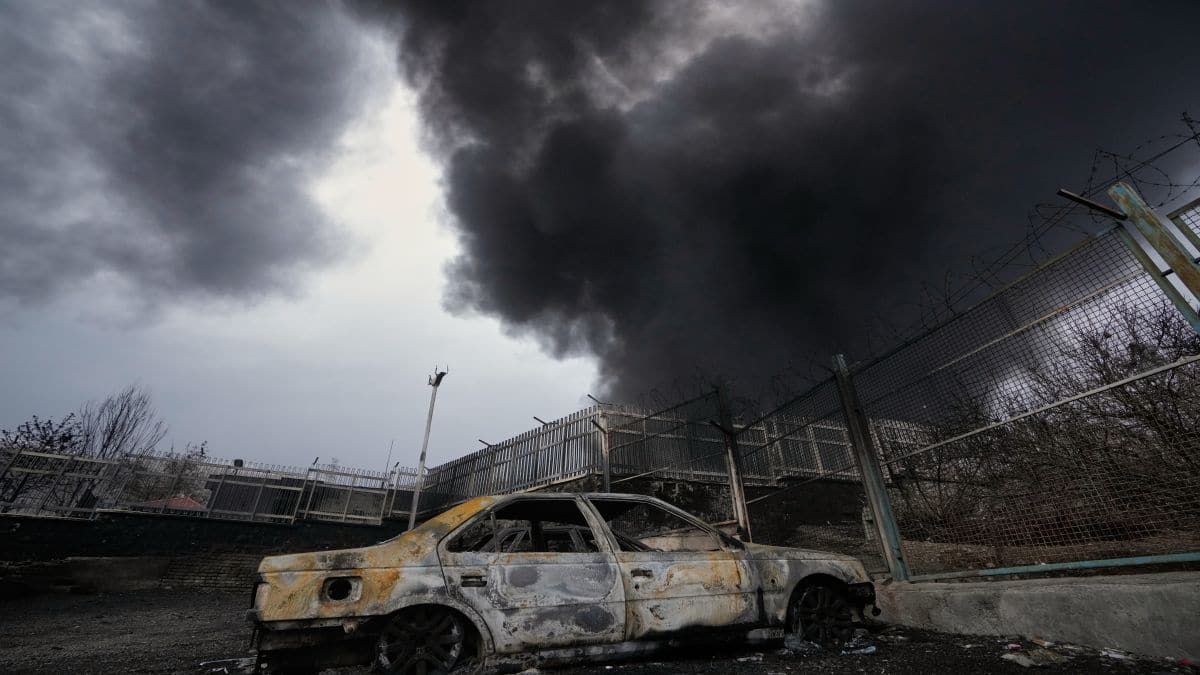
Waking up to a pitch-black sky at 8:00 AM isn't a scene from a movie for people in Tehran anymore. It’s their Monday morning. After the March 7 strikes on oil depots in Shahran and Rey, the city didn't just wake up to the smell of burning fuel. It woke up to an atmospheric nightmare where the rain itself has turned into a toxic, oily sludge. If you're looking for a textbook definition of an environmental catastrophe, this is it.
The Iranian Red Crescent Society isn't mincing words. They’ve warned that this "black rain" is essentially a chemical cocktail falling from the sky. When thousands of tons of crude oil and refined petroleum products burn, they don't just disappear. They turn into particulate matter, sulfur oxides, and nitrogen oxides. These particles hitch a ride on water vapor, and when the clouds get heavy enough, they drop a liquid that’s closer to diluted battery acid than rainwater.
Why the Rain is Actually Oily
You might think rain would wash the air clean. Usually, it does. But when the sheer volume of soot is this high, the process—known as atmospheric scavenging—reaches a breaking point. The raindrops become so saturated with hydrocarbons that they leave a greasy, black film on everything they touch.
I’ve seen reports of residents in Tajrish, miles away from the actual south Tehran refineries, finding their white cars turned charcoal gray within minutes. This isn't just dust. It’s unburned fuel and carbon black. When this hits your skin, it doesn't just feel wet; it burns. We’re talking about a pH level that can drop as low as 4.0. For context, normal rain sits around 5.6. That jump in acidity is enough to cause immediate skin irritation and long-term damage to anything made of limestone or marble.
The Health Toll No One Can Ignore
The immediate "scratchy throat" people are complaining about is the tip of the iceberg. Doctors like Shahram Kordasti have pointed out that we aren't just breathing smoke. We're breathing PM2.5—particles small enough to bypass your lungs and enter your bloodstream.
- Respiratory Distress: If you have asthma or any pulmonary condition, this air is a death sentence. The mix of sulfur dioxide and moisture creates sulfuric acid right in your airways.
- Chemical Burns: The Red Crescent has specifically warned about "chemical burns of the skin." If you’re outside when it starts drizzling, you aren't just getting wet; you’re being exposed to corrosive runoff.
- Secondary Poisoning: Those black droplets are landing on vegetable gardens and open-air markets. Ingesting these polycyclic aromatic hydrocarbons (PAHs) is a shortcut to severe gastrointestinal issues and, eventually, cancer.
Environmental Damage That Lasts Decades
The fires at the Shahid Tondgooyan refinery and the Shahran depot aren't just "local" problems. This toxic cloud is already moving. Reports indicate it’s drifting toward Central Asia, potentially affecting air quality as far away as Almaty, Kazakhstan.
When this acidic water hits the soil, it changes the chemistry of the earth. It leaches aluminum from the soil, which is toxic to plants and trees. If this continues, the agricultural belt around Tehran could see a massive crop failure. The "wax layer" on leaves that protects plants from disease is being dissolved by the acid. Basically, the plants are being stripped of their immune systems.
The water supply is another terrifying variable. Most of Tehran’s water comes from dams. If the catchment areas for these dams are blanketed in this oily soot, the filtration systems aren't designed to handle that kind of hydrocarbon load. You can't just "boil" oil out of water.
Living in the Gloom
The psychological impact is just as heavy as the physical one. Imagine having to turn on your car’s headlights at noon because the smoke is so thick the sun can't get through. People are rationing their time outdoors like they’re in a fallout shelter. The government has already slashed gasoline quotas to 20 liters per person, but that’s the least of anyone’s worries when they can't even open their windows.
If you’re in the city, the advice is simple but hard to follow. Keep your windows shut. Don't use air conditioners because they’ll just suck those toxic particles right into your living room. If you absolutely have to go out, use an N95 mask or better. A simple cloth mask won't stop the chemical vapors.
Immediate Steps for Safety
If you've been exposed to the rain or the thickest parts of the plume, you need to act fast.
- Decontaminate Immediately: If that black rain touches your skin, wash it with lukewarm water and mild soap for at least 15 minutes. Don't scrub; you don't want to push the toxins deeper.
- Seal Your Home: Use damp towels to seal the gaps under doors and around window frames. This helps catch the fine soot that tries to seep in.
- Avoid the Runoff: Don't let pets near puddles. The concentration of toxins in standing "black water" is significantly higher than in the falling rain.
- Monitor Your Lungs: If you feel a tightness in your chest that doesn't go away after an hour of being in "clean" indoor air, you need medical attention. This isn't just a cough; it’s chemical inflammation.
This situation isn't going to clear up the moment the fires die out. The particles are already in the upper atmosphere, and we’ll be dealing with the "black rain" phenomenon every time it drizzles for the next several weeks. The environmental bill for these strikes is only just starting to come due.