Luiz Inácio Lula da Silva is betting that the ghost of 2006 is his best shield against the fire of 2026. On Tuesday, in a move that signals survival over innovation, the 80-year-old president confirmed that Geraldo Alckmin—the very man he once crushed in a runoff—will remain his vice-presidential running mate for the October general election. It is a decision rooted in a cold, mathematical necessity that many within Lula’s own Workers’ Party (PT) find hard to swallow. While the radical wings of the left clamored for a running mate who might "fire up the base," Lula chose the man who puts the markets to sleep, and in the volatile theater of Brazilian politics, boredom is a luxury he cannot afford to lose.
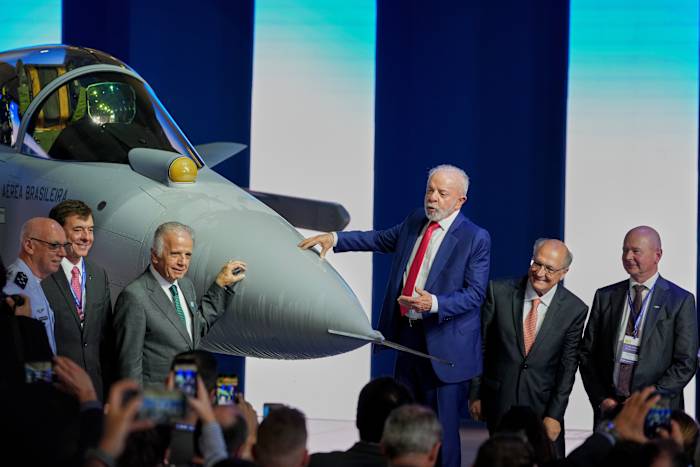
The announcement came during a high-stakes cabinet meeting in Brasília, a farewell of sorts as Alckmin prepares to resign from his post as Minister of Development, Industry, Trade, and Services. Under Brazil’s strict electoral laws, ministers seeking office must vacate their seats by April 4. By keeping Alckmin, Lula is effectively telling the Brazilian business elite and the centrist "Centrão" bloc that the radicalism they fear is being kept in check by a soft-spoken, Catholic physician from São Paulo. This isn't just a political partnership; it is an insurance policy against a right-wing resurgence led by the Bolsonaro dynasty.
The Pragmatism of an Aging Lion
Lula is no longer the fiery union leader who first took the presidency in 2003. He is a veteran who understands that winning an election in Brazil requires more than just the "red" vote. In 2022, Alckmin was the bridge that allowed conservative voters in the wealthy Southeast to hold their noses and vote for a leftist ticket to oust Jair Bolsonaro. In 2026, the challenge is even steeper. The opposition is coalescing around Senator Flávio Bolsonaro, who carries his father’s name but lacks the legal baggage that currently sees the elder Bolsonaro barred from office.
The "Alckmin Factor" is less about what he adds and more about what he prevents. He prevents the narrative that the PT is planning a total socialist takeover. He prevents the flight of capital that often accompanies leftist rhetoric. Most importantly, he provides a face of institutional stability to an international community that is increasingly wary of South American volatility.
Why Not a New Face?
Within the halls of the Planalto Palace, the debate over Alckmin was fierce. Critics argued that the Vice President, at 73, does not represent the future. There were calls to elevate a younger governor or a figure from a larger right-wing party like the PSD to widen the coalition even further. Lula’s refusal to pivot suggests a deep-seated distrust of new alliances. He knows Alckmin. He knows how Alckmin reacts under pressure. In a landscape where loyalty is often sold to the highest bidder, Alckmin’s quiet adherence to the administration’s goals has earned him a spot that logic alone might not have secured.
The Economic Buffer
Alckmin’s role as the Industry Minister wasn't a vanity appointment. It was a strategic placement to put a pro-market face on a government that has struggled to manage inflation and a ballooning fiscal deficit. By keeping him on the ticket, Lula is signaling continuity to the Faria Lima financial district in São Paulo.
The markets generally view Alckmin as a "rational actor." When Lula makes populist statements regarding interest rates or state spending, it is often Alckmin who works the phones behind the scenes to reassure investors. If Lula had replaced him with a more ideological figure, the resulting market shock could have derailed the very economic recovery the president is counting on to win his fourth term.
The Congressional Battlefield
Beyond the presidency, the October elections will decide the makeup of a Congress that has become increasingly hostile to the executive branch. Lula admitted as much during the cabinet meeting, lamenting that "politics has become a business." He cited rumors that a single federal representative seat can cost upwards of 50 million reais to secure.
In this environment, Alckmin is the negotiator. His decades of experience as the Governor of São Paulo gave him a Rolodex that the PT lacks. He speaks the language of the traditional right—the landowners, the industrial barons, and the religious conservatives. Without Alckmin, Lula would be an island in a sea of conservative lawmakers.
The Shadow of the Bolsonaro Name
The real driver behind this "loyalty" is the threat of the Liberal Party (PL). With Jair Bolsonaro sidelined by the courts, his son Flávio has successfully branded himself as a more polished version of his father’s "Bolsonarismo." The polls currently show a dead heat, a "coin-flip" as many analysts describe it.
Flávio Bolsonaro is targeting the same centrist voters that Alckmin is meant to hold. The opposition’s strategy is simple: paint Lula as a relic of the past and the PT as a corrupt machine. By standing next to Alckmin—a man who spent thirty years as the PT’s primary rival—Lula can point to the ticket as a "Broad Front" for democracy. It is a shield against the accusation of partisanship.
A Government in Transition
The reshuffle triggered by the April 4 deadline is massive. With 18 of the 37 ministers stepping down to run for various offices, the Lula administration is entering a "lame duck" period of sorts, where the focus shifts entirely from governing to campaigning. Lula has stated he will not appoint new political heavyweights to these roles, opting instead for technical secretaries to keep the gears turning.
This is a risky gambit. It leaves the administration’s flank open to attacks on efficiency. If the public service stalls because the leadership is out kissing babies and shaking hands, the "Broad Front" might look more like a "Broken Front." Alckmin’s departure from the Ministry of Industry is particularly poignant; he was the one driving the Mercosur-EU trade deal and navigating the thorny tariff disputes with the United States.
The Institutional Survival
The 2026 election is not about a clash of ideas; it is a clash of identities. Lula is betting that the Brazilian people prefer the stability of a known quantity over the unpredictability of a new dynasty. Alckmin is the embodiment of that known quantity. He is the "Alckmin" that Brazilians have seen on their television screens for forty years—unexciting, predictable, and safe.
For the Workers' Party, this is a bitter pill. They are effectively outsourcing their future to a man who represents the very establishment they spent decades fighting. But as the polls tighten and the rhetoric from the right sharpens, the aging lion in the Planalto knows that in 2026, a boring vice president is not a liability. It is the only way to keep the doors of the palace open.
The strategy is clear: hold the center at any cost, because if the center collapses, the left goes down with it. Lula hasn't just kept a running mate; he has anchored his legacy to the one man who can convince the middle class that the revolution ended years ago.